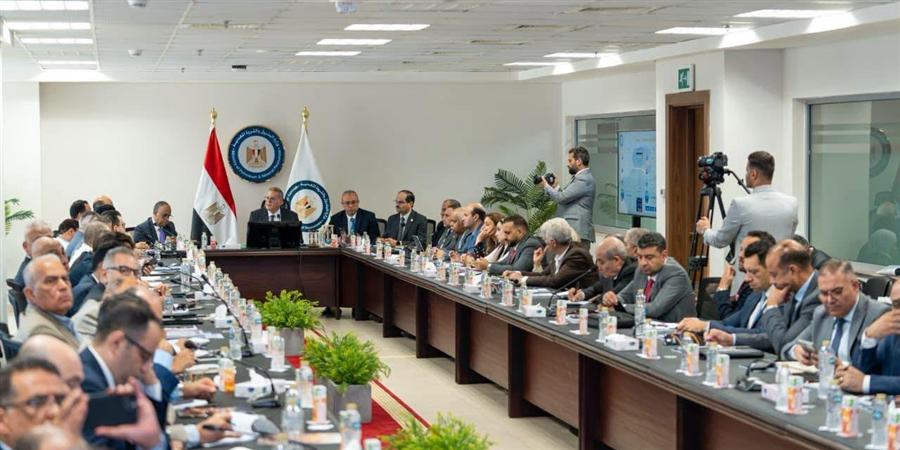
Arab Finance: Egypt is accelerating efforts to increase local oil and gas production and attract new investments in the sector, Minister of Petroleum and Mineral Resources Karim Badawi said in an expanded meeting with media representatives.
Badawi highlighted a series of measures aimed at restoring production growth and backing the country’s energy security.
He attributed the decline in Egypt’s oil and gas production between mid-2021 and mid-202 to a slowdown in investment caused by accumulated arrears owed to foreign partners.
The government has since cleared these arrears, which reached approximately $6.1 billion in June 2024, bringing them down to zero by June 2026.
Exploration, drilling, and production activity increased by around 20% in 2026, with international partners expanding their operations and creating ambitious plans to drill new wells and increase exploration and production.
The minister affirmed that crude oil production has begun to recover, while the government is targeting higher natural gas production in the fiscal year (FY) 2026/2027, compared with the previous FY. He added that the sector registered 112 new oil and gas discoveries over the past two years.
The discoveries included 88 crude oil finds and 24 natural gas discoveries, including the Denise gas discovery in Port Said, which is estimated to contain around 2 trillion cubic feet (Tcf) of natural gas.
Following a recent meeting between Eni CEO Claudio Descalzi and President Abdel Fattah El-Sisi, the company agreed to accelerate production from the discovery, with output targeted to begin in late 2027.
Badawi also noted that work at the Narges field, one of Egypt’s undeveloped discoveries since 2022, has been resumed. A new well is being drilled to confirm reserves and test deeper formations that could add further gas resources.
British oil company bp commenced production from the Fayoum-4 well, targeting production at a rate of 80 million cubic feet of natural gas per day (MMcf/d).
Meanwhile, the petroleum ministry is preparing additional investment opportunities and updating Egypt’s geological database through seismic surveys. Three surveys covering a combined area of more than 300,000 square kilometers are being conducted to provide investors with updated geological data.
The government recently offered 14 exploration blocks in an international bidding round, while work is underway to improve the economic and contractual terms of concessions to encourage gas production.
In the same vein, Egypt increased the utilization rate of its oil refineries from 66% to more than 80% by securing crude supplies and improving the efficiency of processing units, Badawi indicated.
The ministry rolled out plans to invest $4.5 billion to upgrade existing refineries and establish new projects as part of efforts to increase domestic refining capacity and achieve greater self-sufficiency in petroleum products.