Egypt to mobilize $1B for startups over 5 years under new charter
Updated 2/8/2026 8:24:00 AM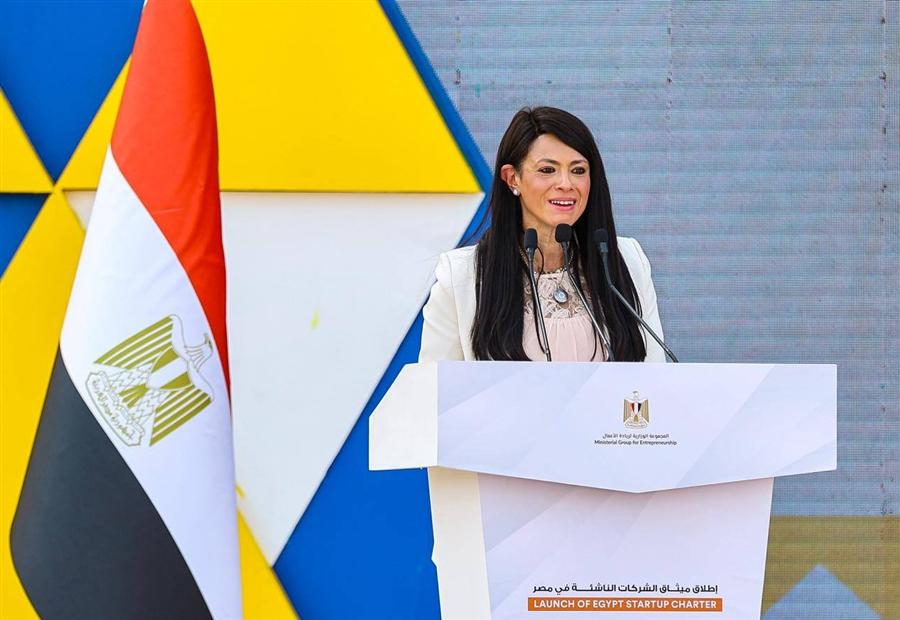
Arab Finance: Egypt has launched a unified financing initiative aimed at mobilizing $1 billion in financing for startups over five years, as part of the newly announced startup charter, according to a statement from the Ministerial Group for Entrepreneurship.
Funding will be mobilized through a combination of government resources, guarantees, and joint investments with venture capital funds and other private-sector financing institutions.
The initiative was unveiled by Minister of Planning, Economic Development, and International Cooperation Rania Al-Mashat, who chairs the ministerial group, during the launch of the startup charter held at the Grand Egyptian Museum (GEM), attended by Prime Minister Mostafa Madbouly, members of the group, and representatives of startups and the entrepreneurial community.
Al-Mashat said the initiative seeks to coordinate available funding resources across government entities and use financing mechanisms to increase their overall impact.
The initiative involves several national entities, including the Micro, Small, and Medium Enterprises Development Agency (MSMEDA), the Credit Guarantee Company in Egypt (CGC-Egypt), the Central Bank of Egypt (CBE), the Financial Regulatory Authority (FRA), the Information Technology Industry Development Agency (ITIDA), and the ministries of investment, finance, and environment.
According to Al-Mashat, the framework is designed to support private-sector and venture capital investment across all stages of startup growth, while ensuring a continuous flow of funding.
A unified database will support this to track startups’ progress, coordination among relevant stakeholders, engagement with the entrepreneurial community to align with market needs, links to international investors, and mechanisms to address funding gaps when they arise.
The initiative is expected to reach around 5,000 companies over its duration, including 500 startups that secure funding exceeding $1 million, as well as support the development of five companies valued at $1 billion.
Al-Mashat said the initiative offers investment mechanisms suited to different stages of growth, from the idea stage through scaling and exit.
As part of the Startup Charter, Al-Mashat also announced the adoption of a unified national definition for startups, intended to standardize eligibility for incentives and link government support to clear growth and innovation criteria.
Under the Charter, a startup is defined as a newly established company that develops or offers an innovative product, service, or business model.
To qualify, the company must be innovative, have a legal structure that allows for investment, be less than seven years old, demonstrate potential for growth, be based on technology or intellectual property, and address a defined market need.
Al-Mashat explained that startups can apply for a classification certificate through the MSMEDA via two tracks.
A fast-track option, processed within five working days, is available for startups nominated by accredited entities such as venture capital funds, incubators, and accelerators.
A standard track, processed within 14 days, is open to all eligible startups and includes a review by a committee representing government bodies and the entrepreneurial community.
The initial classification is valid for three years and is subject to renewal every two years following a review of the company’s status.
Startups may appeal classification decisions through an independent legal committee at MSMEDA, with the application fee refundable if the appeal is accepted.
The startup charter was developed over a year of consultations involving 15 national entities and more than 250 participants, including entrepreneurs, investors, support organizations, government officials, academic experts, and members of parliament.
The charter is intended to serve as an operational framework for updating entrepreneurship-related policies and regulations in line with market needs and technological developments.
Related News