Despite the ongoing regional war that erupted at the end of February 2026 and the previous regional uncertainty that sharply affected the country, the Egyptian economy managed to maintain a stable performance during the first three months of the current year.
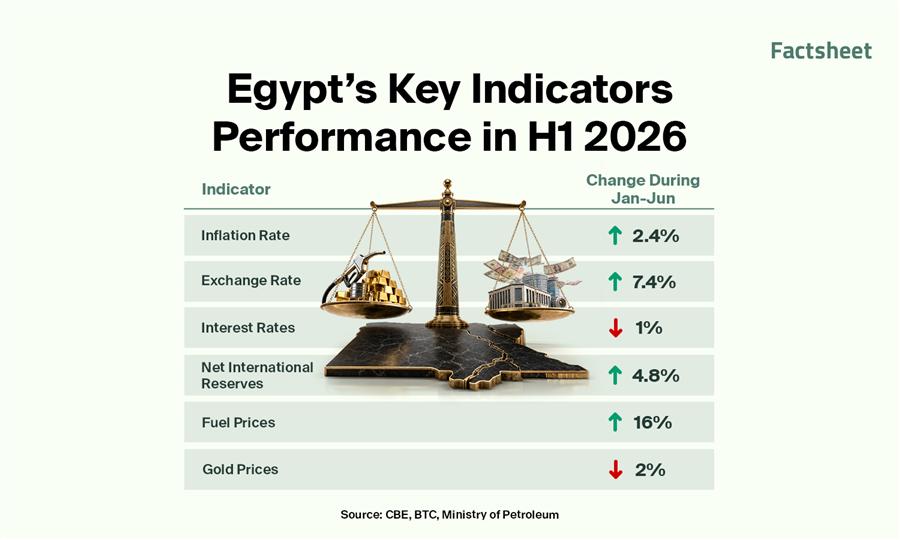
In this factsheet, we provide an overview of the performance of the key macroeconomic and monetary indicators in Egypt during the first quarter (Q1) of 2026.
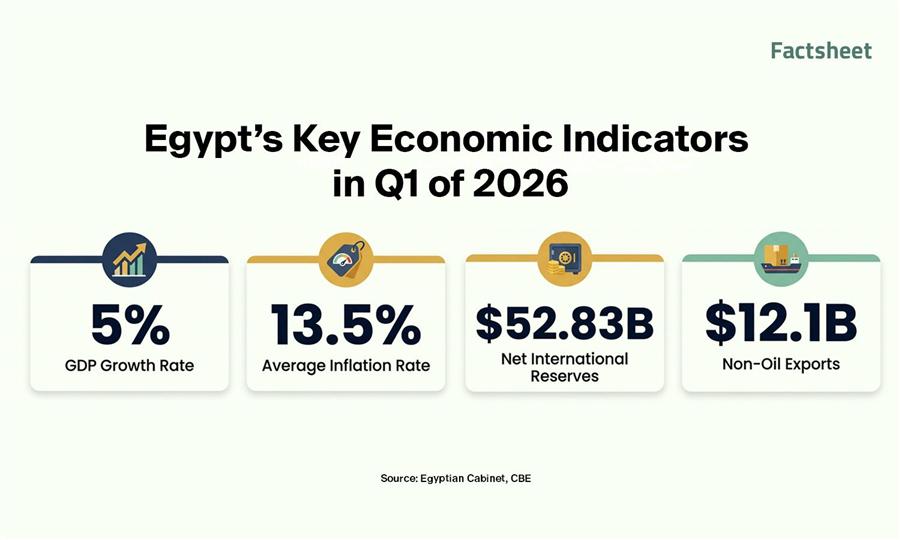
- Egypt’s gross domestic product (GDP) growth hit 5% in the third quarter (Q3) of fiscal year (FY) 2025/26, versus 4.8% in Q3 FY2024/25. This growth exceeded expectations, as it was anticipated to decline to 4.6% due to geopolitical tensions in the Middle East and higher oil prices.
- The urban headline inflation rate has been increasing since the beginning of the year, reaching an average of 13.5% during Q1, compared to an average of 16.8% during the same period a year earlier.
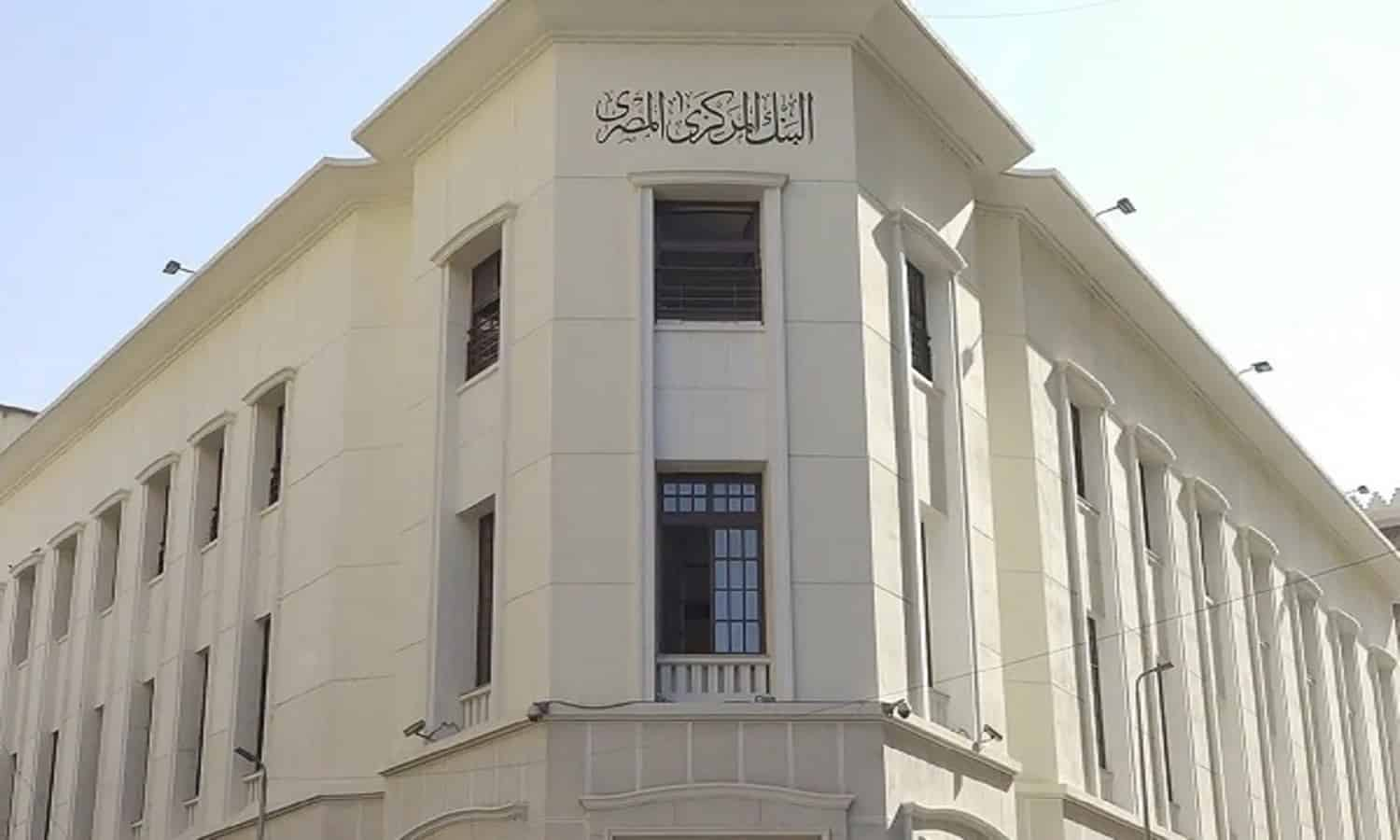
- The Central Bank of Egypt’s (CBE) Monetary Policy Committee (MPC) cut key interest rates once during Q1. In February, interest rates were reduced by 1%. As a result, the overnight deposit rate, overnight lending rate, main operation rate, and discount rate reached 19%, 20%, 19.5%, and 19.5%, respectively.
- Despite the uncertainty, Egypt’s net international reserves (NIR) steadily increased during January-March 2026 from $52.59 billion to $52.83 billion.
- The pressures resulting from the war caused foreign investors to withdraw hot money from the country, which negatively affected the exchange rates. The EGP-USD exchange rate jumped by 15% from EGP 47.55 at the beginning of January to EGP 54.5 by the end of March.
- Disruptions in global supply chains caused global prices, especially energy, to rise. This widened the non-oil trade deficit by 78.3% year-on-year (YoY) to $10.7 billion in Q1 2026.
- The country’s non-oil exports declined by 9% from $13.32 billion in Q1 2025 to $12.1 billion in Q1 2026. On the other hand, non-oil imports jumped by 18% to reach $22.8 billion in Q1 2026, compared to $19.32 billion during the same period in 2025.
By: Amina Hussein
Related News