Arab Finance: Egypt's marketing and market research landscape is accelerating toward data-driven intelligence in 2026, as businesses navigate economic headwinds like currency devaluation and inflation, while embracing AI-powered MarTech and agile analytics to fuel growth.
According to PwC's MENA Media and Entertainment Outlook 2024-2028, the MENA media and entertainment market is expected to grow steadily in line with global trends, with industry revenue projected to hit $18 billion by 2028. Transition to digital’s share of the total market is likely to rise from 71% in 2024 to 74% in 2028, as advertising revenue surges 7.4%. Meanwhile, total advertising spending is forecast to make up 51% of the total market, surpassing consumer spending for the first time.
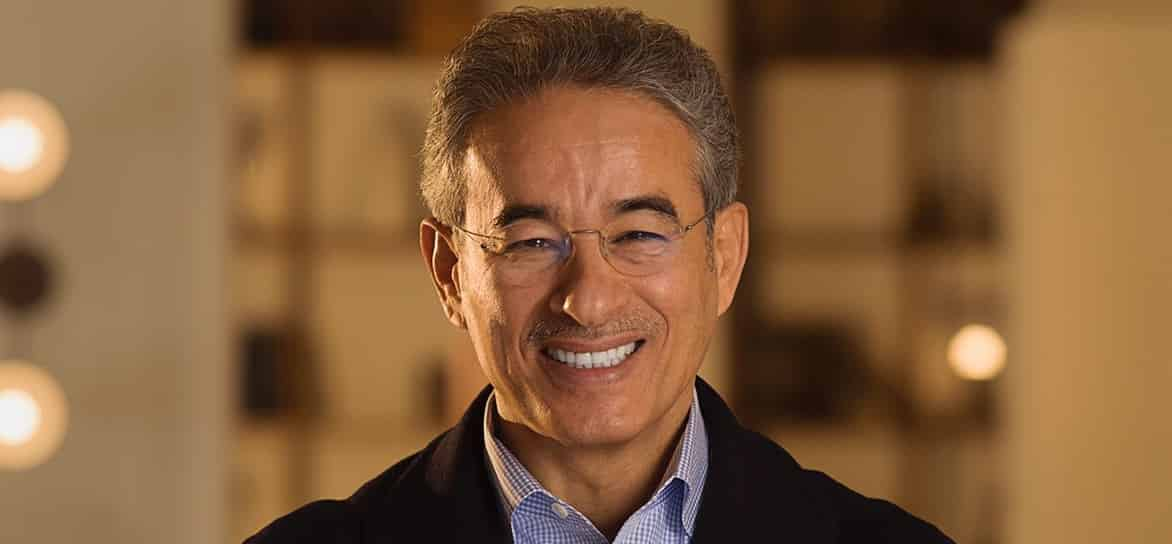
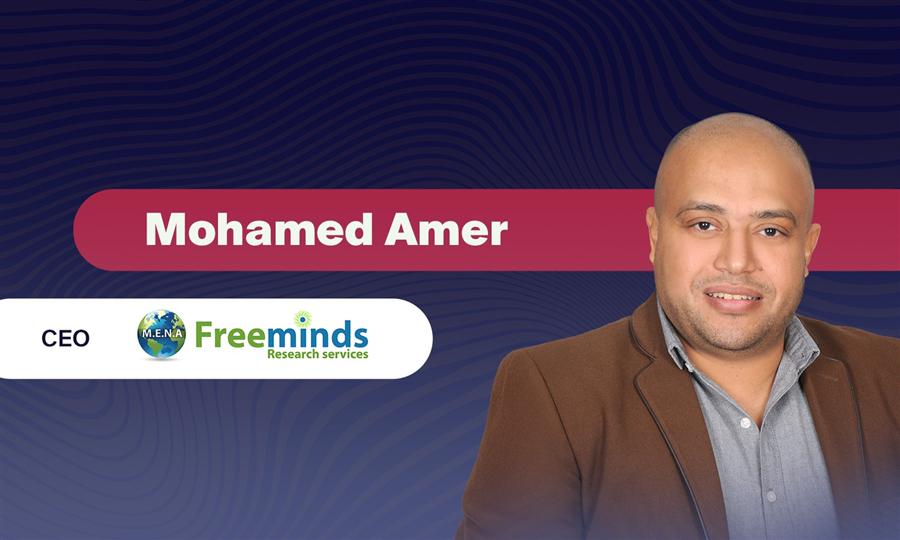
In this dynamic landscape, where actionable insights are increasingly prioritized over traditional intuition amid intensifying Cairo-Riyadh-Dubai hub competition, Arab Finance sat down with Mohamed Amer, CEO of Freeminds MENA, the pioneering consultancy bridging local gaps with global standards across MENA.
1-You founded Freeminds MENA over 10 years ago. Looking back at that early window, what was the specific "gap" or "pain point" in the market that convinced you a new kind of consultancy was necessary?
10 years ago, data processing in the Egyptian market involved many lengthy steps before delivering final results. Meanwhile, European and other regions were adopting more advanced solutions that yielded higher-quality, accurate, and efficient outcomes.
This gap inspired the launch of Freeminds MENA. With a new vision, we operate at the standard of international agencies, eliminating unnecessary overheads and saving significant time spent on data cleaning and validation.
2- Your firm emphasizes an "analytical approach" involving comprehensive consults. How does this methodology differ from that of a traditional creative agency?
Time is the ultimate competitive currency for both brands and agencies. Traditional companies often overlook their importance, while intelligent ones harness it strategically.
Today's startups move quickly; they need to launch rapidly and will only work with partners who can deliver immediate support. If you cannot meet their urgent timeline, you will not be considered.
3-Freeminds works across vastly different industries. What is the common thread in your strategy that allows you to drive results in such diverse niches? And what are the top rewarding industries?
The unifying strategy across all sectors is actionable insight. We translate data into a clear narrative for our clients: "Here is the core problem, and here is how to solve it." Every industry, at its core, is pursuing customer satisfaction. We empower that pursuit by providing the intelligence to make strategic decisions with confidence.
We find the consumer goods industry to be particularly rewarding. Its fast-paced environment, driven by constant product evolution and direct consumer feedback, perfectly aligns with our agile, insight-driven methodology, yielding significant mutual returns.
4- We are witnessing an intense "Hub War" between Cairo, Riyadh, and Dubai. As an emerging market expert, where do you see the most untapped potential for marketing consultancies right now?
For the most untapped potential, I look to Egypt. Many local firms operate without deep strategic partnerships with marketing consultancies. This means they often miss the structured market reviews, opportunity-threat analyses, and foundational strategic insights. These are now essential for growing any agency that steps in to fill this void.
This creates an opportunity for agencies to become true in building market understanding. When market research becomes one of your priorities, you will find your 4Ps, and that is the beginning of your strategy.
5- A new wave of MarTech startups is entering the MENA scene, offering "AI-agents" and automated "Traffic-as-a-Service." What do these players have to offer that traditional firms do not, and how is Freeminds adapting its legacy expertise to compete with these tech-first entrants?
Every entrepreneur begins with a promising idea and the conviction that it will succeed. However, launching without first validating the market is a high-risk move. Many startups lack the time, resources, or expertise to conduct thorough research, leading them to launch prematurely and face potentially fatal challenges.
This is where Freeminds provides the solution. We offer startups a fast, cost-effective path to market validation. By using our streamlined, digital research model, entrepreneurs can test their ideas efficiently before launch, avoiding critical pitfalls and securing their foundation for success—without sacrificing their limited budget or momentum.
6-How does Freeminds MENA quantify success for its clients? Can you share any high-level financial milestones or growth metrics the company has achieved recently?
We measure our success by our clients' growth. A key indicator is when a client launches a product that we have helped test and optimize. This milestone reflects our core philosophy: we do not operate as vendors, but as dedicated partners, committed to building our clients’ strategy and developing their products to make their vision reality.
Our 2025 growth metrics underscore this model. For instance, we partnered with a Chinese gaming company to develop and launch their game in the Egyptian market. The project was executed flawlessly, and the client was highly satisfied with both the performance and outcomes.
7- What are your specific expansion plans for the Gulf Cooperation Council (GCC), and do you see your model translating easily to those high-competition markets?
Our presence in the GCC and North Africa was strategic from the very beginning. We launched with a focus on the broader MENA region because we recognized its collective vision: to cultivate large, diversified economies and reduce dependency on oil and gas by developing new sectors, a mission we are committed to supporting.
This foresight has been validated. Today, we see Gulf States actively executing this shift, opening all sectors to investment from both local and expatriate communities to drive national development. This is precisely the transformation we anticipated, and we are equipped to enable.
8- How has the definition of "successful marketing" evolved in this region over the last decade?
Egyptian agencies have developed a significant competitive advantage in this region. They gain access to a highly skilled technical and professional team at a competitive cost, providing them with essential support.
Our straightforward, trust-based approach simplifies collaboration for these companies. Furthermore, our local, on-the-ground sales team ensures seamless project control and execution, which you can verify by reviewing our portfolio.
9- Egypt’s market has faced significant currency and inflationary headwinds recently. How are these economic pressures reshaping the way Egyptian companies approach their growth budgets and marketing spend?
This situation presents a significant challenge to our mission. Since our operations rely heavily on USD-denominated tools, we were impacted first by the 2016 devaluation (from USD/EGP 7) and then by the subsequent currency volatility and broader economic pressures.
With marketing and manpower costs rising steeply, our strategic response has been to secure international clients. This diversifies our revenue stream and helps balance the currency pressures we face.
10- How close is the Egyptian market to fully embracing a purely data-driven, analytical approach, and what are the main barriers remaining?
The Egyptian market is in a dynamic transition toward data-driven decision-making. While sectors like fintech, e-commerce, telecom, banking, and major fast-moving consumer goods (FMCG) are leading the charge—treating analytics as a core competitive lever—full, pervasive adoption remains a journey.
The pace is uneven, with a sizable segment of the traditional SME sector and government operations continuing to rely on legacy processes and intuitive decision-making.
The primary barriers to universal embrace can be categorized into four key areas: cultural and organizational mindset, data infrastructure and quality, talent and skills gap, and macroeconomic and regulatory factors.
11- As we look toward the next five years, what is your ultimate goal for Freeminds MENA? Are you aiming to be the leading local consultancy, or do you have sights set on an acquisition or a different kind of industry leadership?
Our vision is to embark on a five-year mission to become Egypt's leading intelligent market research firm.
In the immediate two-year period, our strategic goal is to directly support the nation's burgeoning industrial economy. This aligns with the government's clear directive to revitalize the manufacturing sector, evidenced by the rapid establishment of numerous new factories.
We are committed to empowering these manufacturers. By leveraging our deep analytical expertise in MENA region markets, we will guide them to successfully export their products across the entire Middle East and North Africa.
Furthermore, we are dedicated to partnering with Egypt's innovative startup ecosystem. We aim to align these new ventures with our vision, showcasing a modern, data-driven, and AI-powered "New Egypt" to the global markets.