A New Banking IPO in Egypt
Updated 10/31/2026 9:00:00 AM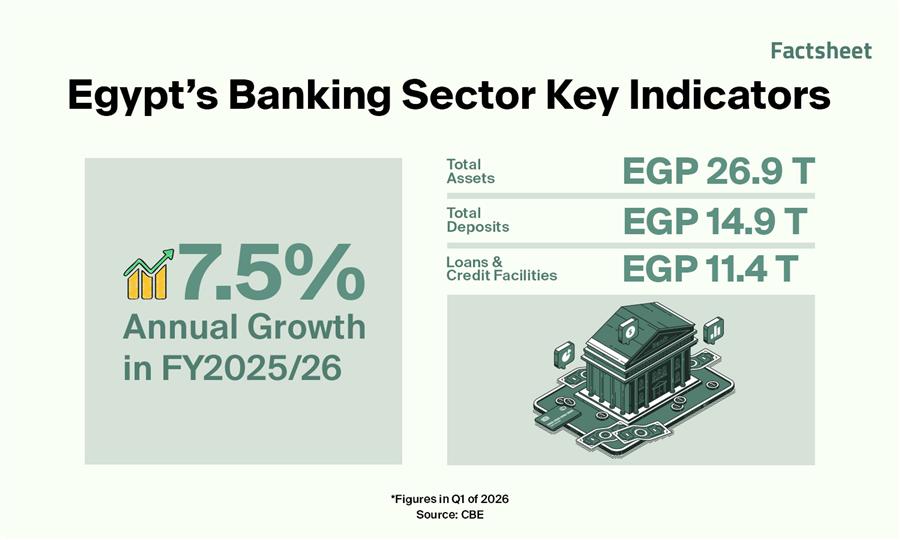
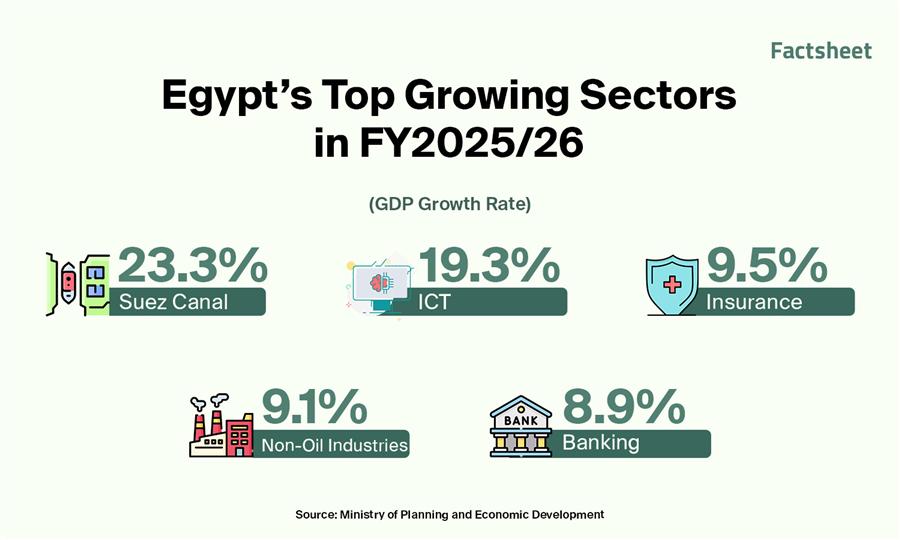
Egypt’s banking sector is a key pillar of the national economy, playing a central role in mobilizing savings and financing investment, productive activities, and trade. The sector recorded an annual growth rate of 7.5% in fiscal year (FY) 2025/26, underscoring its contribution to economic activity. Amid the government’s efforts to expand private-sector participation and broaden private ownership of state-owned assets, Banque du Caire is preparing to list its shares on the Egyptian Exchange (EGX). The listing is expected to broaden the investor base and deepen Egypt’s capital market.
In this Factsheet, we take a closer look at the initial public offering (IPO) of Banque du Caire, while shedding light on Egypt’s banking sector position.
- Banque du Caire’s IPO represents one of the major developments in Egypt’s capital market in 2026. The final offering price was set at EGP 5.3 per share, valuing the bank at approximately EGP 80.83 billion, equivalent to $1.46 billion. The offering forms part of efforts to broaden the investor base and increase private sector participation in banking ownership. Trading on the EGX is scheduled to commence on November 2, 2026, under the ticker symbol BQDC, following the completion of the public and private offerings on October 29, 2026.
- Banque du Caire’s offering comprises approximately 6.86 billion shares, representing 45% of its issued capital, compared with the initial plan to sell 30%. The offering consists of 6.519 billion shares allocated to private placement, accounting for 95% of the total shares offered and 42.75% of the bank’s capital, and 343.125 million shares allocated to the public offering, representing 5% of the offering and 2.25% of the bank’s capital. The private placement was subscribed approximately six times, rising to 19.8 times when shares allocated to certain qualified investors were excluded.
- Total assets of Egypt’s banking sector, excluding the Central Bank of Egypt (CBE), reached approximately EGP 26.9 trillion in March 2026.
- Deposits remain the primary source of funding for banks operating in Egypt, reaching approximately EGP 14.9 trillion in March 2026. Household deposits in local and foreign currencies accounted for 59.8% of total deposits, highlighting their importance in providing a stable funding base. Meanwhile, loans and credit facilities extended to customers reached approximately EGP 11.4 trillion, with the private sector accounting for 40.5% of the total.
- Financial soundness indicators point to the resilience of Egyptian banks and their capacity to absorb risks. The capital adequacy ratio reached 18.5% at the end of the first quarter (Q1) of 2026, exceeding the minimum regulatory requirement of 12.5%. Meanwhile, the non-performing loan (NPL) ratio declined to 1.9%, indicating an improvement in asset quality, while the NPL provision coverage ratio stood at approximately 90.2% at the end of Q4 2025.
- Egypt’s banking sector maintained strong liquidity and profitability indicators. The liquidity ratio reached 40.3% in local currency and 79.5% in foreign currencies at the end of December 2025, exceeding the respective minimum regulatory requirements of 20% and 25%. The loan-to-deposit ratio stood at 66.4% over the same period, reflecting the expansion of lending relative to the deposit base. In terms of profitability, return on equity reached approximately 39% at the end of 2024.
By: Amina Hussein
Related News