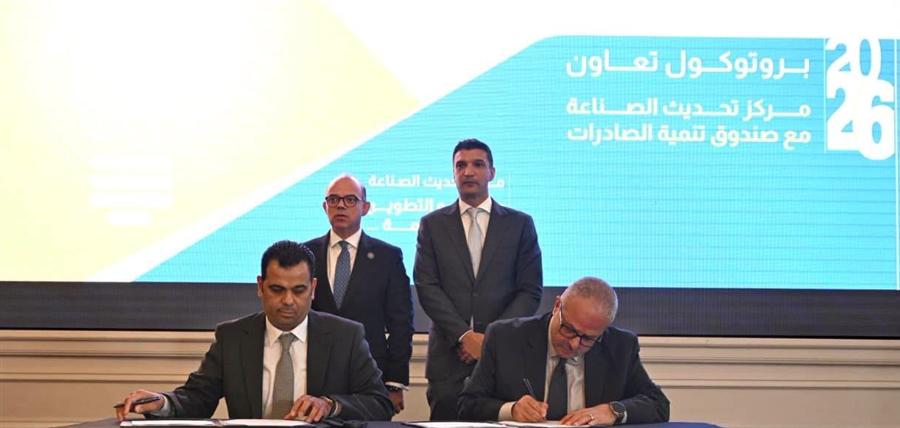
Arab Finance: The Industrial Modernization Center (IMC) and the Export Development Fund signed a cooperation agreement to implement a program worth EGP 557 million aimed at helping industrial companies obtain quality, conformity, sustainability, and environmental compliance certifications, according to a statement, as per a statement.
The program forms part of efforts to link export support mechanisms with international quality and accreditation requirements and facilitate the access of Egyptian products to foreign markets.
Under the agreement, the Export Development Fund will provide financing of EGP 557 million and identify the targeted sectors and support mechanisms, while the IMC will oversee implementation, receive applications, monitor execution, and measure the program's impact on beneficiary companies and exports.
The one-year program targets around 200 industrial facilities operating in seven sectors: medical and pharmaceutical industries, engineering, chemicals, textiles, ready-made garments, food processing, and home furnishings. Exports from participating companies are expected to increase by 20% to 25% as a result of compliance with international quality standards.
The agreement includes a direct reimbursement mechanism for certification costs through the IMC, with support rates ranging from 30% to 60%. Companies will be classified according to annual export volumes, with small and medium-sized enterprises exporting less than $1 million annually receiving higher support rates.
Minister of Investment and Foreign Trade Mohamed Farid said improving export performance depends on producing goods capable of competing in international markets, noting that quality standards have become an essential component of export growth.
He added that the government is restructuring export development programs to reduce costs for manufacturers and exporters, particularly those associated with obtaining international certifications and accreditations.
The minister also said the government is working to establish laboratories in Egypt capable of issuing internationally recognized certifications locally, helping reduce costs and processing times while supporting exporters.
Farid added that the ministry aims to expand the base of exporting companies and support more businesses in accessing foreign markets through technical and financial assistance and simplified procedures.
He stressed the importance of coordination between government entities, the private sector, and business organizations in addressing challenges facing exporters and supporting the development of the export sector.
For his part, Hatem El Nawawy, Executive Head of the Export Development Authority, said the inclusion of certification and accreditation costs within export support programs reflects efforts to align export development tools with international market requirements.
He added that quality certifications help companies access new markets, strengthen their presence in existing ones, and support expansion into more competitive export destinations.