Arab Finance: Egypt’s freight and logistics market is projected to grow from $10.93 billion in 2025 to $14.66 billion by 2031, recording a compound annual growth rate (CAGR) of 5.04% between 2026 and 2031, according to a report by the Information and Decision Support Center (IDSC).
The Cabinet-affiliated center released the report titled “Green Logistics: Towards a Sustainable Supply Chain Model,” outlining the sector’s contribution to Egypt’s economy and the country’s transition toward more sustainable supply chains.
Logistics underpins international trade through transportation, warehousing, inventory management, and packaging. Despite its economic role, the sector generates emissions from transportation, consumes substantial energy in warehouses, and produces waste through packaging materials.
Against this backdrop, governments and companies are increasingly adopting green logistics practices to reduce emissions, conserve energy, and limit waste while maintaining operational efficiency. These measures include electric and hybrid vehicles, energy-efficient warehousing technologies, sustainable packaging, improved inventory systems, and recycling.
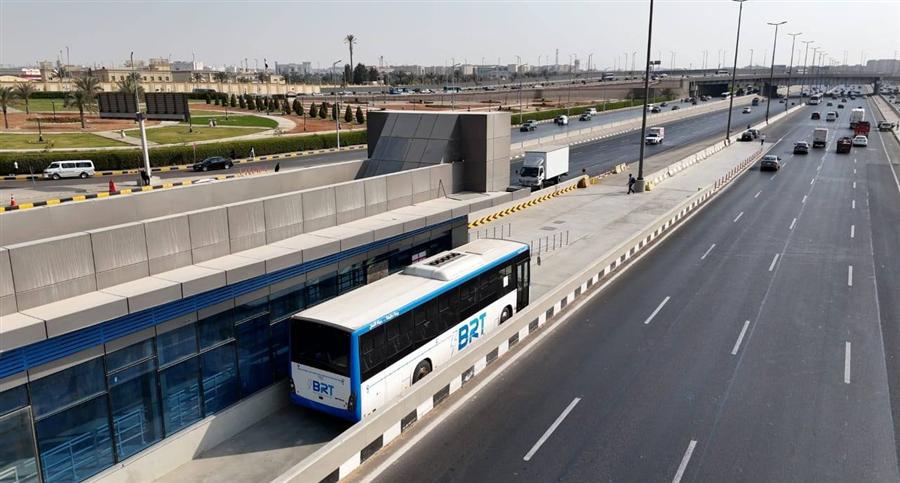
In Egypt, the transition is taking place alongside the expansion of transport infrastructure, including the modernization of ports, construction of road networks, and increased focus on clean fuels and renewable energy.
The transport and storage sector contributed an average of 5% to Egypt’s gross domestic product (GDP) between fiscal years (FYs) 2015/2016 and 2024/2025, based on the national database of the Ministry of Planning, Economic Development, and International Cooperation. Its GDP value maintained an upward trajectory during the period despite fluctuations in annual growth.
Beyond its contribution to GDP, the sector supports Egypt’s role in global maritime trade. Around 12% of global seaborne trade passes through the Suez Canal, which provides the shortest maritime link between East and West without locks.
According to Suez Canal Authority (SCA) figures available through May 2025, the waterway can accommodate 62.2% of the global oil tanker fleet and 92.6% of bulk carriers when fully loaded. It can also receive the entire global fleet of container ships, vehicle carriers, general cargo vessels, and other vessel types.
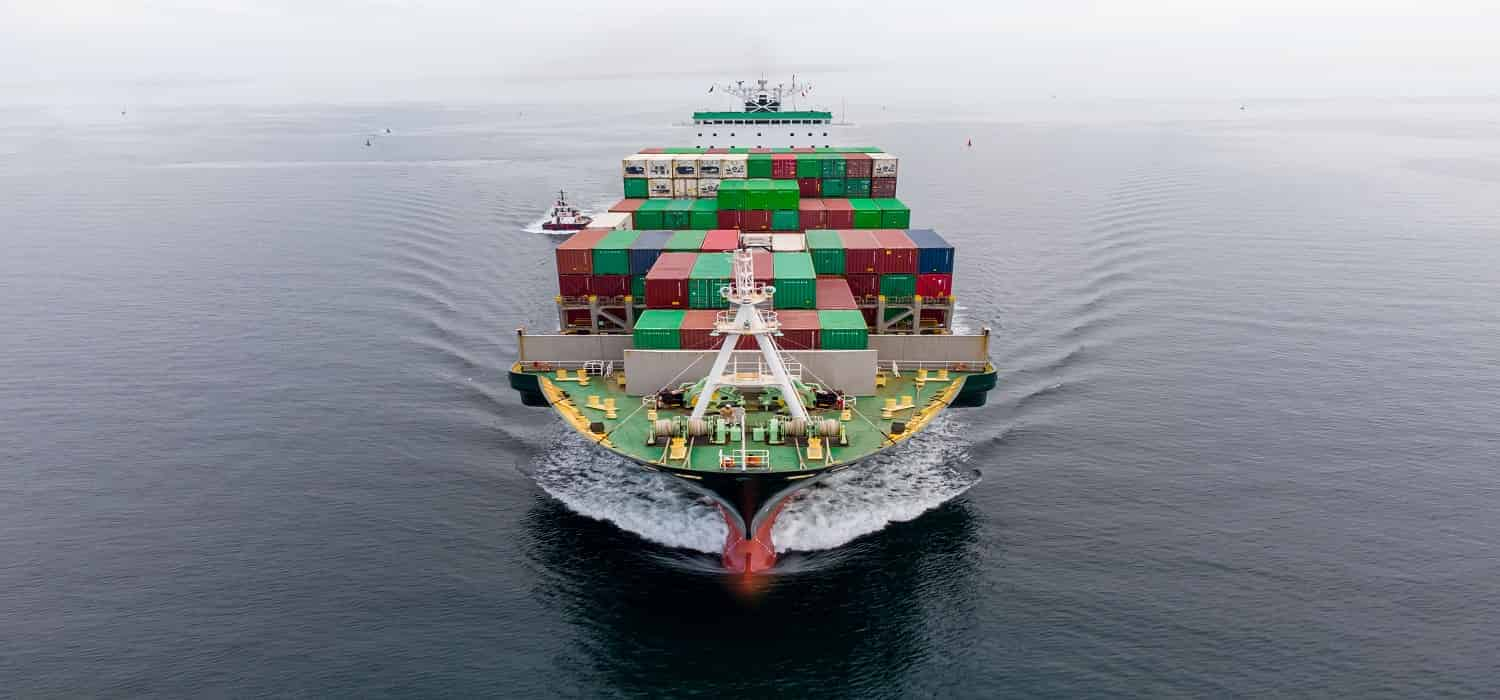
Egypt’s port network provides another foundation for its logistics ambitions, with around 90% of the country’s foreign trade moving through seaports. The country has 19 commercial seaports on the Mediterranean and Red seas, comprising 14 operating ports undergoing development and five new facilities under construction at Abu Qir, Al-Max, Gargoub, Berenice, and Taba.
Several Egyptian ports have advanced in international rankings. East Port Said Port ranked third globally and first regionally in the World Bank and S&P Global Market Intelligence’s 2024 Container Port Performance Index (CPPI). Port Said also placed 53rd in the 2025 Lloyd’s List ranking of the world’s 100 largest container ports.
Damietta Port was listed among the top 20 container terminals in the 2024 CPPI and ranked tenth globally for annual improvement, while Alexandria Port placed 90th in the 2025 Lloyd’s List ranking.
Ain Sokhna Port also secured a Guinness World Record for the deepest artificial port basin created on land, at 19 meters. The port is pursuing another record for quays extending a combined 18 kilometers, while Abu Qir Port is seeking recognition for what would be the Mediterranean’s deepest port, at 22 meters.
The government is seeking to move beyond using seaports solely as cargo transit points by developing them into smart logistics hubs connected to international supply chains.
The sector is also a major source of employment due to its links with industry, trade, and agriculture. Transportation and warehousing accounted for 8.7% of Egypt’s workforce in the first quarter (Q1) of 2026, representing an estimated 2.9 million workers out of a total labor force of 33.3 million.
Data from the Central Agency for Public Mobilization and Statistics (CAPMAS) also showed that the sector added a combined 17,100 jobs during 2023 and 2024. Continued development of transport networks, ports, and logistics zones is expected to support demand for workers across transportation, warehousing, supply chain management, shipping, and distribution.
Logistics infrastructure also connects production centers with consumer markets, lowers transport and storage costs, and links remote areas with urban and industrial centers. This role extends across industry, agriculture, and trade by improving distribution and reducing losses.
The Suez Canal Economic Zone (SCZONE) is central to this model through projects designed to attract industrial and service investments. Egypt is also working to establish seven integrated logistics corridors linking industrial, agricultural, and mining production areas with seaports.
The corridors will connect ports on the Red and Mediterranean seas through railway infrastructure, including the high-speed electric train network, as well as major roads, dry ports, and logistics zones.
Transportation services generated $9.4 billion in foreign currency receipts during FY2024/2025, according to the report, underscoring the sector’s contribution to foreign currency resources.
The government is also seeking greater private-sector participation in transport and logistics projects under policies including the State Ownership Policy Document. SCZONE provides one model for connecting transport infrastructure with logistics services and industrial activity.
Turning to the market’s structure, the IDSC cited estimates by market research firm Mordor Intelligence showing that manufacturing accounted for 31.22% of Egypt’s logistics market in 2025. The segment’s share was supported by imports of raw materials and exports of finished goods, alongside demand for transportation and warehousing in economic and duty-free zones.
Wholesale and retail logistics are forecast to expand at a CAGR of 5.32% between 2026 and 2031, supported by organized retail and e-commerce. The shift is increasing demand for reverse logistics, automated distribution centers, and smart inventory management.
Construction remains another source of logistics demand driven by housing, urban transportation, and tourism projects. In agriculture, further investment in cold chains and refrigerated port storage could reduce losses and provide more stable revenues despite the seasonal nature of exports.
By service type, freight transportation held the largest share of the Egyptian logistics market at 59.73% in 2025, supported by volumes from manufacturing, construction, and agriculture, as well as the integration of transport fleets with ports and industrial zones.
Courier, express, and parcel (CEP) services are expected to be the fastest-growing segment, recording a CAGR of 5.77% between 2026 and 2031 as e-commerce and demand for express delivery expand. That growth is also driving greater use of returns management and smart warehousing services.
Operators are upgrading their fleets with digital tracking systems and electronic recorders, which can reduce empty trips by up to 12%. CEP providers are also adopting proof-of-delivery applications and enterprise resource planning (ERP) systems to improve visibility and operational efficiency.
Broader digitalization efforts include the National Single Window for Foreign Trade Facilitation (NAFEZA) and warehouse management systems (WMS), which help accelerate customs clearance, reduce cargo dwell times, and lower logistics costs. Investments in highways, railway connections, air cargo terminals, and free zones are also shortening domestic transit times.
The IDSC said multinational logistics companies are continuing to expand in Egypt amid infrastructure development and opportunities associated with government projects.
As Egypt works toward greener supply chains, the report identified seven main areas of state action: clean and sustainable transportation, green-port development, integrated and sustainable logistics zones, digital transformation of logistics services, solar-powered refrigerated warehouses, multimodal transportation, and smart and green ports.