Arab Finance: International energy companies highlighted the role of investment incentives, commercially viable gas agreements, and the settlement of outstanding payments in supporting their expansion in Egypt and encouraging further investment in its petroleum sector.
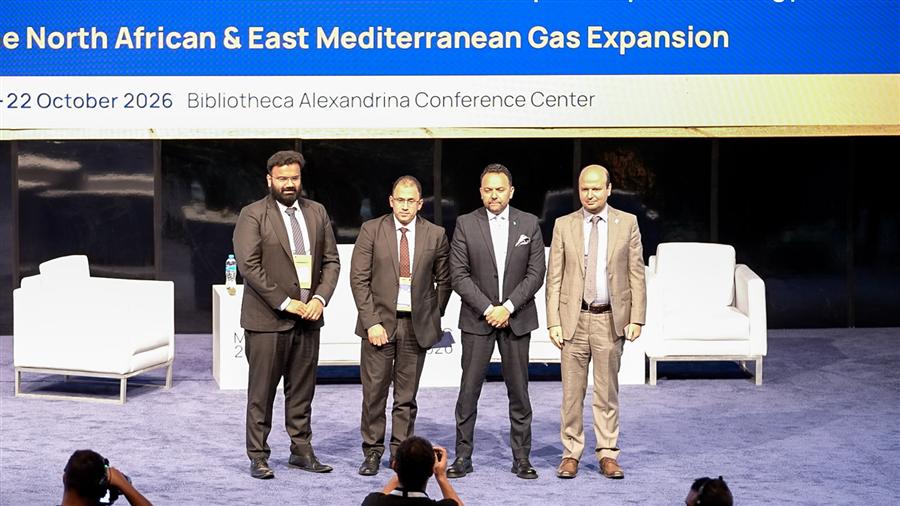
Speaking at the Mediterranean Offshore Conference and Exhibition (MOC 2026), industry executives outlined opportunities to increase production and make greater use of Egypt’s resources and infrastructure. Minister of Petroleum and Mineral Resources Karim Badawi opened the event at the Bibliotheca Alexandrina on October 20.
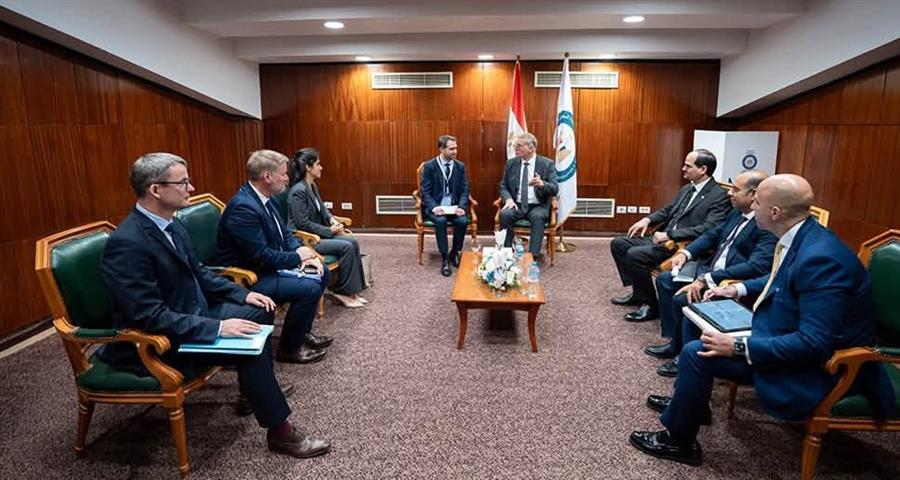
The panel discussions brought together Egyptian petroleum sector leaders and executives from international companies operating in Egypt and the Mediterranean, including France-based energy company TotalEnergies.
Greg McDaniel, Senior Vice President of International Assets at US-based oil and gas producer APA Corporation, Egypt’s largest crude oil producer, stressed that economically viable commercial terms encourage investment in gas projects and increase domestic supply. He pointed to the company’s gas agreement with the Ministry of Petroleum and Mineral Resources and the Egyptian General Petroleum Corporation (EGPC), which has supported the expansion of its Western Desert gas development program.
McDaniel explained that translating Egypt’s gas resources into industrial growth requires flexible commercial arrangements, competitive costs, and coordinated use of infrastructure to deliver reliable energy supplies to consumers.
Payment certainty was another priority for investors. Channa Kurukulasuriya, Egypt Country Manager at US-based energy company Chevron, described a marked improvement in the petroleum investment environment compared with the same period last year. Timely payments, he explained, address a central investor concern, while favorable financial terms, respect for contractual obligations, and the ministry’s collaborative approach further strengthen Egypt’s appeal.
Beyond the investment framework, Kurukulasuriya identified Egypt as central to the Eastern Mediterranean gas strategy. He cited its position as the region’s largest gas consumer and its commercial and political relationships with Europe, Africa, and the Gulf states as foundations for its role as a regional gas hub.
Egypt’s offshore and onshore facilities, pipelines, processing plants, and liquefied natural gas (LNG) export terminals provide an integrated infrastructure network, he added. Skilled personnel at the Egyptian Natural Gas Holding Company (EGAS), EGPC, and other sector entities further support the effective use of these assets and the country’s gas resources.
Kurukulasuriya emphasized that LNG re-exports represent only one option for using available gas. More abundant supplies could also support fertilizer, petrochemical, iron and steel, refining, cement, glass, and ceramics production. He linked energy availability to economic growth, arguing that Egypt has the necessary foundations to translate greater supply into industrial development.
Hany Esmat Ibrahim, Chief Executive Officer and Country Chair in Egypt at Malaysia-based energy company Petroliam Nasional Berhad (PETRONAS), also pointed to stronger investor confidence. He described relations between the government and investors as a partnership built on transparency, cooperation, and a shared commitment to creating long-term value.
The settlement of outstanding payments marked an important demonstration of Egypt’s commitment to its obligations, Esmat explained. That confidence has supported further investment, including the recent approval by PETRONAS and UK-based energy company Shell of Phase 12a development in the West Delta Deep Marine concession. He said the decision reflected confidence in Egypt’s energy resources and the long-term viability of its investment environment.
Describing the broader partnership with Egypt as spanning more than 25 years, Esmat highlighted its role in connecting offshore Mediterranean gas resources to LNG infrastructure at the Idku export complex. This integration has served international markets while generating value for Egypt, shareholders, and customers.
He identified infrastructure, integration, and flexibility as the three foundations of Egypt’s role as a regional energy hub and gateway for the Eastern Mediterranean. Its LNG facilities, extensive gas networks, access to international markets, and substantial domestic demand, he explained, offer a competitive advantage in developing the region’s gas resources commercially.
For Dubai-based oil and gas producer Dragon Oil, opportunities extend from mature oil fields to offshore gas. Fareed Abdulla Al Hashmi, Chief Growth Officer, described Egypt as a core market and pointed to the company’s success in increasing production and extending the operating life of Gulf of Suez fields.
When Dragon Oil acquired the Gulf of Suez assets previously held by UK-based energy company bp and operated through the Gulf of Suez Petroleum Company (GUPCO), it identified opportunities to apply its expertise where others saw aging assets, Al Hashmi explained. The subsequent production gains and longer field lives demonstrated the company’s operational capabilities.
Dragon Oil is now assessing Mediterranean opportunities with EGAS, focusing on shallow-water gas resources that could be connected quickly to existing infrastructure and supply the domestic market.
Al Hashmi said the company’s Gulf of Suez experience, alongside access to the supply chains and Dubai network of energy group Emirates National Oil Company (ENOC), supports that direction. Its engagement in the Alexandria region focuses on identifying assets where it can add value and finding partners that share its commitment to accelerating production for domestic consumers.
Technology was also featured in the discussions. Yasser El-Tawansy, Managing Director for Egypt, Sudan, and the East Mediterranean at Houston-based energy technology company SLB, formerly Schlumberger, outlined how digital tools and integrated operations could improve efficiency across Egypt’s gas value chain, from exploration and production to processing and manufacturing.
He emphasized connecting subsurface knowledge with drilling and production decisions through integrated operational processes. Artificial intelligence and digital solutions, he added, can reduce uncertainty and shorten decision-making times.
El-Tawansy explained that SLB’s cooperation with Egyptian stakeholders aligns with national priorities and includes knowledge transfer, local talent development, and improvements to operational frameworks to support the sector’s long-term competitiveness.