Arab Finance: Egypt is preparing a housing program covering rental units, social housing, and homes for middle-income earners, with construction and delivery planned over the next four years, Prime Minister Mostafa Madbouly said.
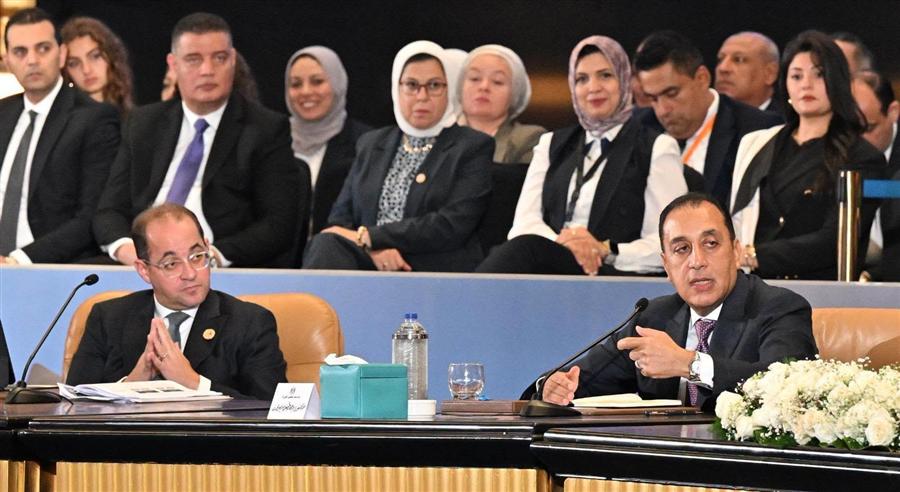
President Abdel Fattah El-Sisi will announce and launch the program, Madbouly told a session on regulating markets and strengthening social protection during the third day of the Egypt 2026 Forum. The forum is being held under the President’s directives.
The planned program follows El-Sisi’s announcement a day earlier that thousands of rental housing units would be offered. It also reflects his instructions to continue the Housing for All Egyptians presidential initiative and other social housing projects, providing suitable homes for different income groups.
Responding to a question on housing, Madbouly said approximately two million units had either been completed or were being developed over recent years. Most fall within social housing projects, alongside developments serving middle-income buyers, including Sakan Misr, Dar Misr and Janna.
These programs offer homeownership through payment plans extending up to 20 years, at prices Madbouly described as unmatched elsewhere in the Egyptian real estate market. He acknowledged that some households cannot afford privately developed homes, making it necessary to offer housing options that reflect their financial circumstances.
Under El-Sisi’s directives, the government is also considering restoring rental housing as a more prominent option alongside ownership. Madbouly recalled that renting remained widespread in Egypt through the 1960s and 1970s before declining under laws and policies that, he argued, failed over time to maintain a balanced housing market or provide suitable accommodation across income groups.
He referred to El-Sisi’s earlier assessment that the decline of rental housing contributed to the spread of informal settlements. Offering a wider range of housing options would help meet demand and prevent the emergence of further informal areas, Madbouly said.
Drawing comparisons with other markets, he noted that rental properties account for around half of housing in many countries, with shares reaching 50% to 60% in developed economies. He cited this as a reason to reconsider the role of renting in Egypt’s housing policies.
Housing forms part of a broader social protection agenda intended to cushion households against the effects of economic reform. Madbouly said the forum session allowed Ministers and officials to present progress on that agenda and explain the measures being implemented.
While economic reforms seek to address problems accumulated over decades, the government recognizes their impact on certain social groups, he explained. Expanding protection programs is therefore intended to limit those effects as much as possible.
Among these measures is the Takaful and Karama, or Solidarity and Dignity, cash assistance program, which Madbouly said has supported approximately 8.2 million families since its inception and currently serves about 4.7 million.
He described support as structured around three-year periods, during which households’ circumstances are assessed to determine whether employment opportunities and sufficient income have enabled them to move out of poverty and become financially independent. The program will continue for those who remain eligible, with assistance levels adjusted to reflect economic conditions and continuing need.
Turning to the proposed cash-based commodity subsidy system, Madbouly stressed that the government does not intend to reduce either total subsidy funding or the number of eligible families. Its objective is to identify beneficiaries accurately and ensure assistance reaches those entitled to it.
He said the existing commodity subsidy system covers approximately 60% of Egyptian households. He also described Egypt’s allocations for these subsidies as exceeding those provided by any other country for comparable social protection and cash assistance programs.
The current system largely covers bread and about four other essential commodities, despite differences in households’ needs, Madbouly explained. Under the proposed approach, each eligible family would receive a monetary entitlement that could be used to obtain the basic goods it requires, whether bread or other necessities.
The entitlement would account for inflation and other economic variables, with annual increases built into the program’s design. Madbouly said the government had already raised funding for in-kind subsidies repeatedly, but emphasized that higher spending must translate into households receiving the goods they actually need.
Illustrating the increase, he put food and bread subsidy expenditure at approximately EGP 32.8 billion in 2013–2014, rising to EGP 127 billion by 2023. Allocations subsequently increased to EGP 134 billion the following year, then EGP 160 billion, before reaching approximately EGP 178 billion this year, according to the figures he presented.
Madbouly said funding would continue to rise in response to prevailing conditions, alongside efforts to improve how support is distributed.
Public services are another component of the social protection framework, although the government’s ability to expand them depends on available budget resources. Madbouly cited increases of 30% for healthcare and 20% for education, referring to comparisons with allocations in the previous year and the year before that.
He expressed a desire for substantially larger increases, saying the government would like sufficient fiscal capacity to raise service spending by 100% annually and improve its quality.
Extending the Universal Health Insurance System nationwide within a few years is another government ambition, he added. Achieving that would require hundreds of billions of Egyptian pounds, making additional budget resources essential to accelerating implementation.
The government is also working to secure new funding sources for social protection, which Madbouly identified as its highest priority. Improving Egyptians’ living conditions will remain its central focus over the next three years, despite what he described as unprecedented challenges facing both Egypt and the wider world.
He pointed to rising living costs internationally as a global crisis, while emphasizing the government’s commitment to protecting households and improving their living conditions.
Asked by the session’s Moderator about the future of social protection and social security, Madbouly reaffirmed that pensions, social security assistance, commodity subsidies, health insurance, and support for education and housing would continue over the next four years, backed by substantial allocations in the state budget.