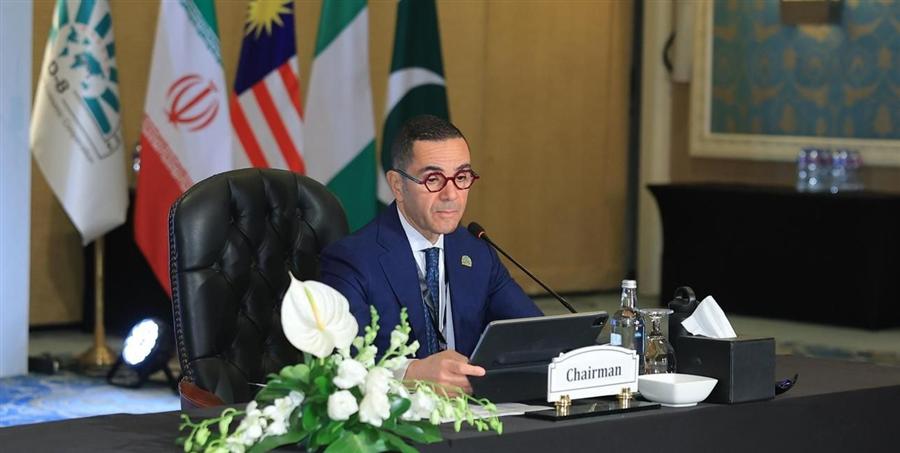
Arab Finance: Egypt has announced the adoption of the Cairo Trade Declaration at the close of the fourth meeting of the D-8 Trade Ministers Council in Cairo, as per a statement.
Minister of Investment and Foreign Trade Hassan El-Khatib confirmed that the ministers approved the report of the steering committee and the expert working group and endorsed the terms of reference for the working group on the comprehensive economic partnership agreement.
The meeting advanced efforts to expand the scope of the D-8 Preferential Trade Agreement, strengthen customs cooperation, and deepen engagement with the private sector.
El-Khatib said the outcomes build on progress made in recent years and align with the direction set by the Cairo Summit in 2014, which marked a shift from political cooperation to economic initiatives focused on trade facilitation, small and medium-sized enterprises, and research institutions.
El-Khatib underscored the need to accelerate the implementation of the Preferential Trade Agreement and its customs instruments, describing them as central to achieving the group’s trade goals.
He noted the importance of adopting a trade facilitation strategy and expanding cooperation in technology and artificial intelligence, including through the D-8 Research and Innovation Leaders Network, which aims to link scientific capabilities across member states.
He also pointed to food and agricultural security as a priority area, emphasizing the role of supporting smallholder farmers.
The minister highlighted the proposed D-8 Business Forum as a key step toward expanding joint investment opportunities.
The forum is expected to connect investors and business leaders from member countries, showcase successful projects ready for scale, and encourage bilateral and multilateral partnerships in priority sectors.
He said this direction aligns with the Cairo Summit’s call to shift toward stronger private-sector involvement.
El-Khatib also noted Egypt’s position as a regional hub linking Africa and Asia, stressing the value of its geographic location, logistics network, and special economic zones in supporting deeper economic integration.