Arab Finance: Egypt’s small and medium enterprise (SME) sector faces an estimated $10 billion factoring gap and a broader $48 billion MENA region financing shortfall. Despite representing the backbone of economic growth and employment, SMEs in Egypt remain severely underserved by traditional banking structures.
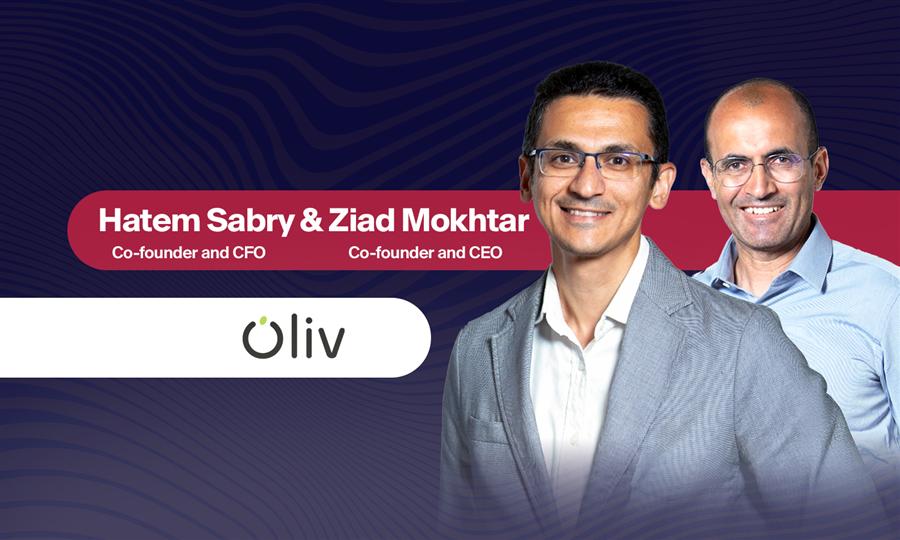
In an exclusive interview with Arab Finance, Hatem Sabry, Co-Founder of Oliv Finance, and Ziad Mokhtar, Co-Founder and CEO of Oliv Finance, discuss how the company secured Egypt's first digital factoring license from the Financial Regulatory Authority (FRA). By leveraging advanced digital infrastructure, iScore information, alternative data, and bank partnerships, Oliv Finance is reshaping non-banking financial services (NBFS) to deliver fast, automated capital to businesses across Egypt.
1-What market gap did you identify when founding Oliv Finance, and why did you choose digital factoring as your entry point into SME financing?
Despite our different professional backgrounds, our decision to establish Oliv Finance was driven by a common observation. Hatem spent around 15 years in investment banking and corporate finance, working with EFG Hermes and later Deutsche Bank in London and Dubai, before moving into Egypt's startup ecosystem as the CFO of several high-growth technology companies, including Trella. Meanwhile, Ziad built his career in technology and venture capital, serving as a founding partner at Algebra Ventures, one of Egypt's pioneering venture capital firms.
During that period, one challenge consistently stood out: the difficulty SMEs faced in accessing debt financing. By combining my experience in banking and corporate finance with Ziad's background in technology and venture capital, we began exploring one fundamental question: How could we help bridge the enormous financing gap facing SMEs?
The scale of the opportunity was significant. Across the Middle East and North Africa, the SME financing gap is estimated at around $48 billion, highlighting the urgent need for innovative financing solutions. After extensive discussions with entrepreneurs, lenders, and industry stakeholders, we concluded that digital factoring represented the most practical entry point to address this challenge.
The opportunity became even clearer when we examined Egypt's factoring market. Factoring penetration remains among the lowest globally, accounting for only 0.3% of gross domestic product (GDP), compared to approximately 1.5% in Morocco, 1.8% in Mexico, 3% in Türkiye, and 5.3% in South Africa. Annual factoring volumes in Egypt stand at around $1.2 billion, while comparable markets process nearly $30 billion annually.
Equally important, factoring currently serves only around 800 to 1,000 companies, despite Egypt having an estimated 250,000 to 300,000 formal SMEs. This points to an estimated $10 billion factoring gap in the Egyptian market alone, creating a significant opportunity to expand access to working capital for underserved businesses.
2- How does Oliv's business model differ from traditional financing solutions available in Egypt?
Traditional financial institutions have historically focused on larger corporate clients because underwriting smaller financing facilities often involves the same level of due diligence while generating lower returns. As a result, many SMEs—particularly those requiring relatively modest financing—remain underserved despite representing the backbone of the economy.
Oliv was established specifically to bridge this gap by providing SMEs with a financing experience built around speed, simplicity, and digital accessibility.
Unlike conventional financing processes, which often require extensive paperwork and approval periods that can stretch from several weeks to months, our platform enables businesses to complete a fully digital onboarding process and receive a preliminary credit decision within minutes. Once approved, eligible companies can begin financing their electronic invoices within 48 hours.
Our model is powered by a proprietary digital credit engine that assesses businesses using multiple data sources, allowing us to streamline underwriting while maintaining prudent risk management. Except for repayment checks, which are still required because Egypt's check infrastructure has not yet been fully digitized, the entire customer journey is conducted digitally.
Another important distinction is our ability to efficiently serve SMEs seeking relatively small financing facilities. Because our operating model is lean and technology-driven, we can profitably provide financing at ticket sizes that many traditional institutions find uneconomical. This allows us to support both banked and underserved SMEs that need fast access to working capital without the lengthy procedures typically associated with conventional lending.
Ultimately, our objective is not to compete with banks but rather to complement the financial ecosystem by expanding access to working capital for businesses that have historically struggled to obtain timely financing.
3-Oliv became the first company in Egypt to obtain a digital factoring license from the FRA. How does this milestone reshape the country's non-banking financial services landscape, and what opportunities does it create for SME financing?
Obtaining Egypt's first digital factoring license from the FRA represents an important milestone not only for Oliv but also for the evolution of the country's non-banking financial services sector. While more than 40 companies currently hold traditional factoring licenses, Oliv remains the first and only company licensed to operate under a fully digital factoring model.
The significance of this license lies in its ability to fundamentally transform the customer experience. Rather than relying on lengthy, paper-based processes, we can digitally onboard clients, assess their creditworthiness, and manage the financing journey through a streamlined digital platform. Today, the only physical document that remains part of the process is the repayment check, as check settlement has yet to be fully digitized in Egypt.
For SMEs, speed is often just as important as access to finance. Many businesses supply large corporates that operate on payment terms of 60 to 90 days, creating significant working capital pressures. During that period, SMEs still need to purchase raw materials, pay salaries, settle taxes, and finance day-to-day operations. By enabling businesses to receive a credit decision within minutes and finance eligible invoices within 48 hours, digital factoring helps bridge this liquidity gap and allows companies to continue operating and growing without waiting months for payment.
More broadly, we believe this milestone demonstrates how technology can expand financial inclusion by making financing faster, simpler, and more accessible. As digital business models continue to gain traction, they have the potential to complement traditional financial institutions and extend financing to a much larger segment of Egypt's SME sector that has historically been underserved.
4- Artificial intelligence (AI), alternative data, and digital infrastructure are transforming credit assessment worldwide. How is Oliv leveraging technology to improve risk assessment, accelerate financing decisions, and enhance the customer experience for SMEs?
Technology is at the heart of Oliv's operating model. Our objective has been to build a financing platform that enables faster and more informed credit decisions by leveraging alternative data and Egypt's rapidly expanding digital infrastructure.
A key enabler has been the country's e-invoicing ecosystem. Since its rollout, electronic invoicing has become one of Egypt's most successful digital transformation initiatives, with more than three billion electronic invoices recorded on the government's platform. This has created a rich and reliable source of transaction data that simply did not exist a decade ago.
We combine this information with multiple digital data sources, including credit bureau records through iScore, Commercial Registry data, identity verification, and other digital indicators that help establish a company's operating profile. By integrating these data points into our proprietary automated credit engine, we can assess creditworthiness, calculate financing limits, and complete underwriting in a matter of minutes.
Beyond accelerating decision-making, this approach enables us to build a more comprehensive view of SMEs than would be possible through conventional financial statements alone. It also allows us to continuously refine our credit assessment models as transaction data grows, strengthening risk management while improving access to finance for businesses with limited borrowing histories.
For SMEs, the result is a significantly better customer experience. Businesses can complete the onboarding process digitally, receive rapid credit assessments, and access working capital within 48 hours, eliminating many of the delays traditionally associated with commercial financing. Ultimately, our goal is to use technology not only to improve operational efficiency but also to make financing more accessible, transparent, and responsive to the needs of Egypt's growing SME sector.
5-Oliv recently secured a credit facility from Suez Canal Bank to expand its financing capacity. How important are partnerships between fintech companies and traditional financial institutions in accelerating financial inclusion and scaling digital lending solutions?
We view partnerships with banks as a cornerstone of our growth strategy. Fintech companies and traditional financial institutions each bring distinct strengths to the market, and we believe the greatest value is created when those strengths are combined rather than viewed as competing models.
Banks have the scale, liquidity, and funding capacity needed to support economic growth, while fintech companies contribute technology, automation, and more agile operating models. At Oliv, our role is to complement the banking sector by providing a digital platform that enables faster credit assessment, streamlined onboarding, and the efficient distribution of financing to SMEs that have traditionally been underserved.
These partnerships create value for both sides. For banks, collaborating with fintech platforms provides an efficient way to expand SME lending through technology-enabled underwriting and data-driven credit assessment, helping them reach a broader segment of viable businesses while maintaining prudent risk management standards.
For Oliv, access to institutional funding facilities significantly strengthens our financing capacity, enabling us to extend working capital solutions to a larger number of SMEs across different sectors of the economy. More importantly, these collaborations allow us to scale responsibly while maintaining the speed and simplicity that define our customer experience.
Ultimately, we do not see fintech as a replacement for traditional banking. Instead, we see the future of SME finance as a collaborative ecosystem in which banks provide the capital and regulatory expertise, while fintech companies leverage technology and alternative data to deliver financing more efficiently. Together, this model has the potential to accelerate financial inclusion, improve access to credit, and support the long-term growth of Egypt's SME sector.
6- Invoice financing and digital factoring remain relatively underpenetrated in Egypt compared with those in regional and international markets. How do you assess the sector's growth potential, and what regulatory or market developments are needed to unlock wider adoption?
We believe Egypt's factoring market is still in the early stages of development, which means its growth potential remains substantial. The sector has recorded strong momentum since the introduction of the Factoring Law in 2018, with market volumes expanding steadily and the number of licensed factoring companies increasing significantly. Nevertheless, penetration remains well below that of comparable emerging markets, indicating considerable room for further expansion.
The challenge today is less about regulation and more about market awareness. While factoring is a well-established working capital solution globally, it is still relatively unfamiliar to many businesses in Egypt. In particular, there remains a perception among some larger corporations that a supplier's use of factoring reflects financial weakness, whereas in reality it is a standard financing tool used to optimize cash flow and strengthen supply chains.
This is reflected in the widespread use of what is commonly known as "silent factoring," where suppliers finance their invoices without formally notifying the buyer. In more mature markets, invoice assignments are typically transparent, with buyers recognizing the financing arrangement and settling payments directly with the financing provider. Such a model creates greater efficiency, transparency, and confidence across the entire supply chain.
Increasing awareness among both suppliers and large corporate buyers will therefore be critical to unlocking the next phase of growth. Factoring should be viewed as a strategic working capital solution rather than a last-resort financing option. It enables SMEs to bridge payment cycles of 60 to 90 days, maintain production, meet payroll obligations, and continue investing in growth while waiting for receivables to be collected.
As awareness continues to improve and digital adoption accelerates, we expect invoice financing and digital factoring to become increasingly integrated into Egypt's broader financial ecosystem, supporting stronger supply chains and expanding access to finance for a much larger segment of SMEs.
7-Egypt has made significant progress in digital payments, e-invoicing, and financial inclusion in recent years. How have these reforms created new opportunities for fintech innovation, and how is Oliv contributing to expanding financial inclusion?
Egypt's digital transformation has fundamentally changed the way fintech companies can serve businesses. The rollout of electronic invoicing, along with broader digital payment and identity verification initiatives, has created a trusted digital ecosystem that enables faster, more transparent, and data-driven financial services.
Beyond improving access to finance, we believe that one of the most important outcomes of our business model is encouraging greater formalization among SMEs. In the past, some small businesses had limited incentives to issue electronic tax invoices or fully integrate into the formal economy. By linking access to working capital to verified electronic invoices, we have helped create a tangible business case for formal compliance.
For SMEs, the value proposition is straightforward. Businesses that issue electronic invoices can unlock financing more quickly, strengthen their cash flow, and access structured credit solutions that were previously unavailable or difficult to obtain. This allows them to expand operations while building stronger financial records that can support future growth.
The broader economic impact is equally important. As more businesses adopt electronic invoicing and operate within the formal economy, transparency increases, the tax base expands, and the quality of financial data available across the ecosystem continues to improve. This creates benefits not only for businesses and financing providers, but also for policymakers seeking to accelerate financial inclusion and economic formalization.
We see this as a genuine win-win model. SMEs gain faster access to finance, government initiatives aimed at digitalization and formalization achieve greater traction, and fintech companies like Oliv can leverage verified transaction data to extend financing to a wider segment of the market. Looking ahead, we believe this virtuous cycle will play a key role in accelerating the development of Egypt's digital financial ecosystem.
8-Since launching Oliv, how has the company performed in terms of financing volumes, client acquisition, and business growth?
Since launching Oliv, we have focused on building a scalable platform capable of serving businesses across a broad range of industries. While we are still in the early stages of our growth journey, the market response has been very encouraging.
To date, we have facilitated close to EGP 1 billion in financing and have served hundreds of businesses operating across sectors including logistics, transportation, FMCG, manufacturing, trading, healthcare, information technology, agriculture, tourism, and professional services.
Although SMEs remain our primary focus, our customer base is not limited to smaller enterprises. We also work with larger corporates that value the speed, simplicity, and fully digital experience our platform offers. In many cases, businesses choose to work with Oliv not because they lack access to financing, but because they require a faster and more efficient working capital solution than conventional financing processes typically provide.
Our technology-driven operating model enables us to efficiently serve companies with diverse financing requirements while maintaining rapid turnaround times. By combining streamlined digital onboarding with automated credit assessment, we have been able to deliver a financing experience that is both scalable and responsive to the evolving needs of Egypt's business community.
As demand for flexible working capital solutions continues to grow, we remain focused on expanding our reach, strengthening our partnerships, and further enhancing our technology to support a wider segment of businesses across the Egyptian economy.
9-Looking beyond Egypt, how do you assess the country's fintech and digital lending ecosystem compared with other markets across the Middle East and North Africa?
Egypt occupies a unique position within the region's fintech landscape. While markets such as the UAE and Saudi Arabia are ahead in terms of product maturity, investment activity, and the pace of fintech innovation, Egypt offers something equally compelling: scale.
The size of Egypt's population, the depth of its business community, and the large number of SMEs create one of the region's most attractive long-term growth opportunities for digital financial services. Although per capita investment and financing volumes may currently be higher in some Gulf markets, Egypt's addressable market is significantly larger, providing considerable room for fintech companies to expand.
At the same time, Egypt has made notable progress in strengthening its regulatory and digital infrastructure over the past few years. Initiatives supporting digital financial services, electronic invoicing, and financial inclusion have created a more conducive environment for innovation. While there is still scope to broaden the range of available fintech products, we believe the market is moving in the right direction and has the potential to become one of the region's leading fintech ecosystems.
10-Looking ahead, what are Oliv's strategic priorities over the next few years?
Our immediate priority is to strengthen Oliv's position as a comprehensive financial partner for SMEs in Egypt. While digital factoring has been our starting point, our vision extends far beyond a single product. Over the next three years, we plan to expand our portfolio by introducing additional financial services that address the broader financing and operational needs of small and medium-sized enterprises.
Ultimately, we want Oliv to become a one-stop financial platform for SMEs, providing businesses with the tools they need to manage their working capital, access financing efficiently, and support their long-term growth. We see ourselves not simply as a financing provider, but as a partner that helps businesses scale and become more resilient.
In terms of growth, we have set an ambitious target of serving 5,000 SMEs by 2029, significantly expanding our reach while continuing to enhance our digital platform and customer experience.
As for geographic expansion, our focus remains firmly on Egypt. We believe the Egyptian market offers exceptional long-term potential, with hundreds of thousands of SMEs that remain underserved by existing financing solutions. Given the scale of this opportunity, our priority is to deepen our presence locally, continue innovating, and contribute to the development of Egypt's SME financing ecosystem before considering expansion into other markets.