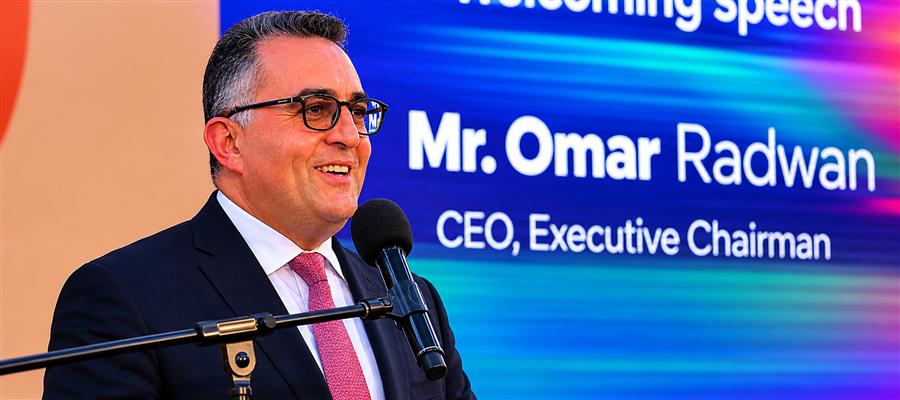
Arab Finance: The Egyptian Exchange (EGX) is ready for a new wave of initial public offerings (IPOs) as improving economic conditions, rising market liquidity, and regulatory reforms strengthen investor confidence, EGX Executive Chairman Omar Radwan said.
“Egypt is more than ready for the new wave of IPOs,” Radwan said in a call to local and international investment banks.
Egypt’s net international reserves (NIR) reached $56.3 billion in July 2026, while remittances hit $43.1 billion during July-May of (FY) fiscal year 2025/2026, up 31.2% year on year (YoY), Radwan said.
In 2025, remittances reached $41.5 billion, with the country welcoming about 19 million tourists during the year.
Radwan also added that Egypt’s net foreign assets had swung by about $58 billion, from around negative $29 billion at the trough of the crisis to approximately positive $29.5 billion.
Sovereign risk has also declined, with Egypt’s five-year credit default swaps recently trading at around 265-270 basis points, a multi-year low and a fraction of crisis-era levels, he noted.
The International Monetary Fund’s (IMF) program with Egypt is scheduled to conclude in December 2026, with the government currently indicating that it does not plan to seek a follow-on program, Radwan clarified.
The IMF has also reported record nonresident inflows into Egypt’s domestic debt market, signaling a return of the carry trade, he said.
Moreover, he added that Egypt’s foreign exchange market had remained functional despite geopolitical shocks, portfolio outflows and exchange-rate volatility, while reserves and net foreign assets reached record or positive levels.
MSCI has also confirmed there is no outstanding foreign-exchange backlog for foreign investors, according to Radwan.
Egypt’s gross domestic product growth reached 4.99% in the third quarter (Q3) of FY2025/2026 and recently surpassed 5%, while inflation has fallen sharply from its crisis-era peaks, Radwan highlighted.
The improvement in the economy has been accompanied by a sharp expansion in the EGX, as listed market capitalization nearly doubled to about EGP 4.3 trillion by mid-August 2026 from approximately EGP 2.17 trillion at the end of 2024, Radwan explained.
The EGX30 index gained 40.6% in 2025 and a further 33.5% by mid-August 2026, he pointed out.
Listed-equity trading reached approximately EGP 579 billion during the first four months of 2026, up 62% YoY, while daily equity turnover has exceeded EGP 18 billion in recent days, compared with an average of around EGP 5 billion in 2025.
The EGX has also attracted a rapidly expanding investor base, with more than 420,000 new investors joining during the first seven and a half months of 2026 alone, compared with 299,000 new investors during all of 2025.
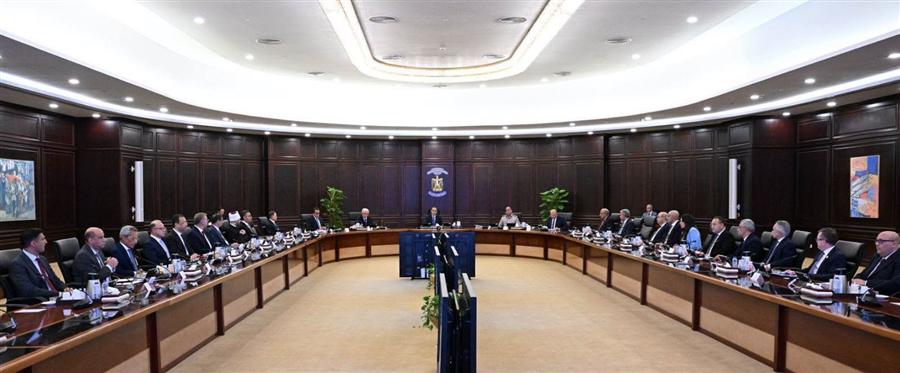
Meanwhile, the Financial Regulatory Authority (FRA), EGX, the Cabinet, the economic group of ministers, and Parliament are continuing to overhaul the legal, regulatory, tax and technological infrastructure supporting the market, Radwan said.
Recent tax reforms could further support the market, he noted. Capital gains taxation on listed securities is being replaced by a stamp-tax regime, with the proposed standard rate at 0.05% per side and 0.025% for same-day transactions. Transaction duties for non-residents have also been reduced by 60% to 0.05% from 0.125%.
Companies undertaking mega-listings with market capitalizations of at least EGP 50 billion can qualify for a 15% income-tax deduction for three years, subject to applicable conditions, Radwan illustrated.
The government is also targeting additional state listings, while more public and private IPOs are expected, he noted.
“Egypt remains strikingly underserved relative to the size of the opportunity,” Radwan said, highlighting investment banking supply as the missing component in the market’s development.
“EGX is hungry for IPOs now,” he said, calling on international, local, and new investment banks to increase their promotion and underwriting activity.
“Hundreds of thousands of newly added investors, rapidly expanding liquidity, and an equity market worth around EGP 4.3 trillion are waiting for the next generation of IPOs,” Radwan said. “Every piece of the puzzle is increasingly falling into place. Now the investment banking industry needs to do its part.”