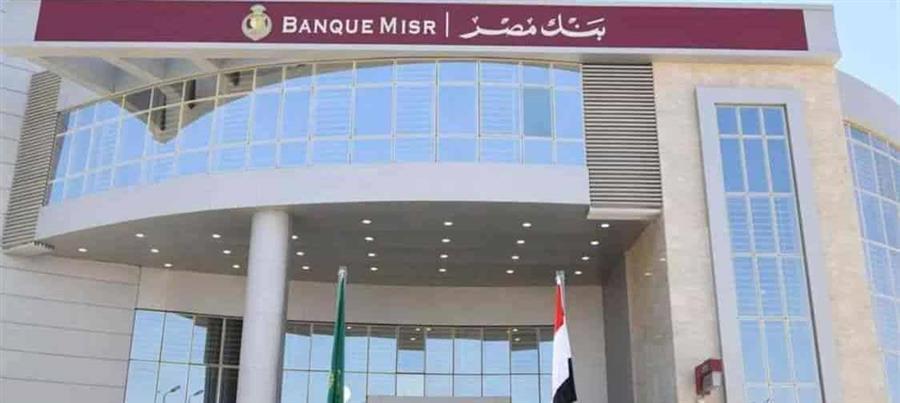
Arab Finance: Banque Misr recorded total pre-tax profits of EGP 154.7 billion for the year ended December 31, 2025, with net profit rising more than 24% to EGP 100.9 billion after EGP 53.8 billion in taxes, as per an emailed financial release.
Total assets rose 16% to approximately EGP 4.205 trillion at the end of December 2025, compared with EGP 3.610 trillion a year earlier. Customer deposits increased 17% to EGP 2.935 trillion from EGP 2.498 trillion.
Net direct customer loans reached EGP 1.403 trillion, up 17% from EGP 1.197 trillion at the end of December 2024, supported by growth of 27% in retail loans and 17% in corporate loans.
Corporate credit and syndicated lending accounted for a portfolio of approximately EGP 1.3 trillion at the end of December 2025, up 17% year on year. The bank reported a further 11% increase by the end of August 2026, when the portfolio reached approximately EGP 1.5 trillion.
The Islamic corporate credit and syndicated loan portfolio stood at approximately EGP 39.5 billion at the end of December 2025, an increase of 20% from a year earlier. The bank also posted a balance of approximately EGP 28 billion at the end of August 2026.
Across conventional and Islamic financing, Banque Misr arranged, financed, and participated in approximately 23 transactions totaling EGP 390.5 billion, with its share amounting to EGP 179.9 billion. These transactions covered real estate investment and development, telecommunications and information technology, oil and natural gas, petrochemicals, food and beverages, automotive, contracting, and tourism.
In retail banking, the portfolio grew 27% in 2025 and expanded a further 22% by the end of August 2026 compared with December 2025 balances.
The bank issued more than 17.4 million cards and served 515,000 merchant locations contracted directly or indirectly across Egypt’s governorates. Annual transactions through these merchants’ point-of-sale (POS) terminals and e-commerce systems exceeded EGP 540 billion. The bank provides modern POS terminals that meet international requirements, including the Payment Card Industry Data Security Standard (PCI DSS).
Islamic retail banking services are offered through 59 Kenana branches across Egypt. The portfolio reached approximately EGP 7.7 billion at the end of December 2025, up 30% year on year, before growing a further 34% to approximately EGP 10.4 billion by the end of August 2026.
Electronic payments also remained central to the bank’s financial inclusion efforts, in line with the Central Bank of Egypt's (CBE) plans to encourage a transition toward a cashless society.
Through payroll cards and accounts for public and private sector companies, Banque Misr secured contracts with 3,873 companies, issued 1.6 million cards, and opened more than 499,000 accounts.
The bank said it maintained first place among banks participating in the Ministry of Finance’s payroll automation system for the 20th consecutive year since its introduction in 2005. Its market share stood at 46.5%, with 2.2 million cards issued for 1,145 contracted government entities. Annual payroll transfers processed for the public and private sectors exceeded EGP 267 billion.
Lending to micro, small, and medium-sized enterprises (MSMEs) expanded across industrial, agricultural, and service activities through the bank’s nationwide branch network. The MSME portfolio grew 11% in 2025 and a further 8% by the end of August 2026 compared with December 2025 balances. The number of small and medium-sized enterprise (SME) clients exceeded 131,000 in December 2025.
The Islamic MSME financing portfolio increased 17% in 2025, followed by another 11% rise by the end of August 2026 compared with December 2025.
Banque Misr said its financing programs cater to businesses of different sizes, alongside non-financial services intended to support financial inclusion, sustainable growth, community development, and efforts to combat unemployment.
Its Express digital loan for small businesses provided EGP 79.15 billion through 73,190 loans between its launch in September 2020 and December 2025. The Instant Loan service for microenterprises extended more than EGP 14.5 billion from its launch in January 2022 through December 2025.
Meanwhile, ZAAT, the bank's first integrated financing program dedicated to women entrepreneurs, granted more than 52,000 loans totaling over EGP 5.3 billion between its launch in March 2022 and December 2025.
Beyond lending, the bank established 17 business development service centers, which delivered more than 261,000 services since their launch in July 2019 and helped secure financing exceeding EGP 3.20 billion for more than 5,000 projects.
It also worked with Google to train thousands of young people in entrepreneurship fundamentals and digital marketing. A comprehensive digital platform for businesses brings together services to support entrepreneurs at different stages of growth.
To widen access to financial services, Banque Misr expanded its domestic network to 901 branches and units by the end of August 2026, alongside approximately 6,700 automated teller machines (ATMs) equipped with modern technology. The bank described its branch network as one of the largest in Egypt, the Middle East, and North Africa.
Its international operations include overseas branches, subsidiaries, and representative offices across Africa, the Middle East, Europe, and Asia, supported by a worldwide network of correspondent banks.
Community development contributions reached approximately EGP 1.5 billion by the end of December 2025, covering a range of initiatives and activities.
The bank's approach incorporates environmental, social, and governance (ESG) principles and identified itself as the first Egyptian state-owned bank to receive Global Reporting Initiative (GRI) approval for its sustainability reporting. It also aligns with the United Nations Global Compact’s corporate citizenship principles and joined the United Nations Environment Programme Finance Initiative (UNEP FI), participating in the launch of the Principles for Responsible Banking.
During 2025, Banque Misr received 85 awards and top rankings from international institutions and publications, including Euromoney, EMEA Finance, Global Finance, and the British magazine The European, recognizing its performance across business sectors.
The bank attributed these recognitions to customer trust and said its strategy focuses on improving service quality, meeting customers’ needs, sustaining long-term performance, and supporting sustainable development and prosperity in Egypt.