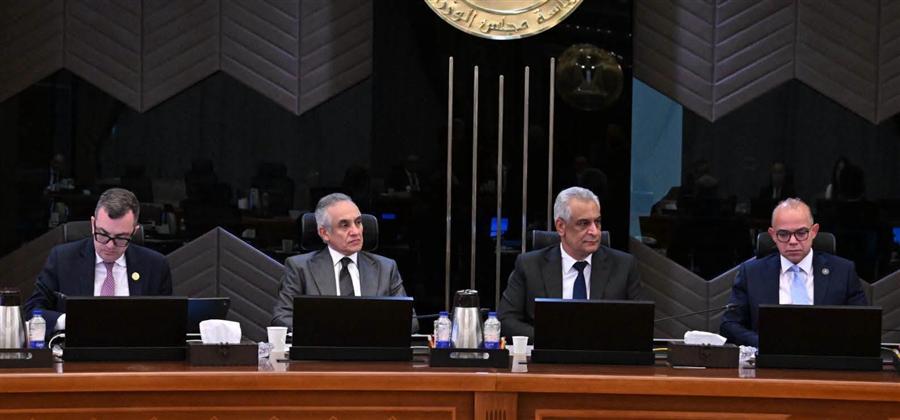
Arab Finance: Egypt's economy recorded a growth rate of 5% during the third quarter (Q3) of fiscal year (FY) 2025/2026, up from 4.8% in the corresponding quarter of the previous FY, according to a presentation by Minister of Planning and Economic Development Ahmed Rostom during a Cabinet meeting chaired by Prime Minister Mostafa Madbouly.
The growth rate exceeded earlier expectations of 4.6%, despite geopolitical tensions in the region, disruptions to global supply chains, and higher oil prices, Rostom said during the meeting, which reviewed economic performance indicators for the January-March 2026 period.
The manufacturing sector remained the largest contributor to gross domestic product (GDP) growth during the quarter, accounting for approximately one percentage point of the overall 5% growth rate. The communications and information technology sector and the wholesale and retail trade sector each contributed 0.7 percentage points.
Rostom said the figures reflected the diversification of growth sources and the continued positive performance of several key sectors across the economy.
The Suez Canal Authority (SCA) recorded the fastest growth rate among economic activities during the quarter, expanding by 23.6%. Rostom attributed the performance to the continued regularity of navigation traffic and the uninterrupted provision of maritime services despite ongoing regional tensions.
The communications and information technology sector also maintained strong momentum, posting a growth rate of 20.3% during Q3. The minister attributed the performance to the expansion of telecommunications and digital technology services, as well as rising demand for internet services and digital applications amid ongoing digital transformation efforts.
Meanwhile, the petroleum sector returned to positive growth for the first time since Q1 FY 2023/2024, recording a growth rate of 0.7%. Rostom said the improvement was driven by higher domestic production of crude oil, condensates, and liquefied petroleum gas (LPG).
Total implemented investments reached approximately EGP 637 billion during Q3 FY 2025/2026, compared to EGP 531 billion in the same period a year earlier, representing an increase of around EGP 106 billion.
Rostom said indicators continued to show a growing contribution from the private sector to investment activity. The share of private investments increased from an average of between 35% and 39% during FY 2023/2024 to more than 50% during FY 2024/2025, with this level continuing throughout the first three quarters of FY 2025/2026.
He said the trend reflects government efforts to strengthen the role of the private sector as a key driver of investment and economic growth. At the same time, the share of public investments declined relative to total investments, reflecting the government's approach of expanding private-sector participation in development projects.
On the expenditure side, Rostom said household consumption remained the primary driver of economic growth during Q3, contributing approximately 6.1 percentage points, compared to 4.8 percentage points during the corresponding quarter of FY 2024/2025.
The contribution of current government spending also increased to 3.1 percentage points, compared to 0.3 percentage points a year earlier.
In addition, the contribution of investment and changes in inventories improved to 0.9 percentage points, compared to a negative contribution of 2.4 percentage points during the same period of the previous fiscal year, indicating an improvement in investment activity during the quarter.