Arab Finance: Minister of Planning and Economic Development Ahmed Rostom discussed with World Bank officials opportunities to finance Egyptian agri-processing platforms and reduce agricultural losses in Upper Egypt, as per a statement.
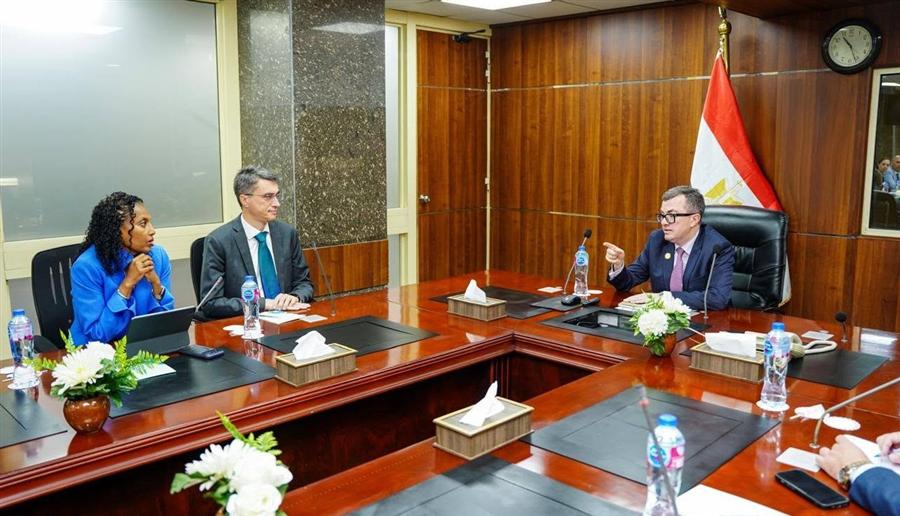
During a meeting with Meskerem Brhane, Regional Director for Sustainable Development at the World Bank covering the Middle East, North Africa, Afghanistan, and Pakistan (MENAAP), and an accompanying delegation, Rostom reviewed opportunities to attract international investment into Egypt's agricultural sector and strengthen collaboration on development priorities.
Rostom said the government is advancing a comprehensive development agenda centered on strategic sectors, including agriculture, digital transformation, and infrastructure, which are expected to support economic growth.
He noted that current initiatives are aligned with the state's investment plan and highlighted ongoing efforts to expand partnerships with the private sector, particularly through public-private partnership (PPP) models to maximize returns from public assets.
A key focus of the discussions was the development of agricultural aggregation centers, cold-storage facilities, and logistics services, particularly in Upper Egypt, in coordination caused by linked to climate-related challenges and inefficiencies in traditional storage and handling systems.
The minister also outlined plans to combine farmer training and capacity-building programs with advanced technological solutions, including smart agricultural extension services. He noted that studies are currently underway to integrate remote sensing and satellite technologies into agricultural operations, along with exploring the expansion of agricultural insurance programs to improve farmers' resilience to climate change and environmental risks.
The meeting further examined opportunities to activate the World Bank's global "AgriConnect" program in Egypt. The initiative is designed to strengthen agricultural value chains, improve productivity, and promote the development of higher-value agricultural industries through innovative financing mechanisms supported by the World Bank.
For her part, Brhane praised what she described as Egypt's significant progress in increasing agricultural production and expanding agricultural exports into international markets.
She stressed the importance of continuing to invest in agro-processing and value chain development, noting their potential to generate stronger economic returns and create sustainable employment opportunities for young people in rural communities.
The discussions form part of broader efforts to enhance the competitiveness of Egypt's agricultural sector, increase value-added production, and attract greater investment into rural development and agribusiness activities.