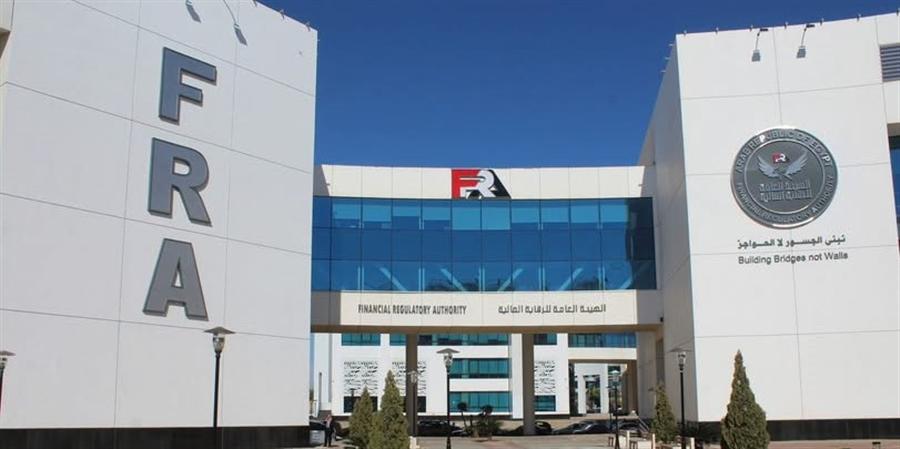
Arab Finance: The Financial Services Institute (FSI) has expanded the mandate of the Regional Center for Sustainable Finance and Carbon Markets, establishing it as a technical expertise, research, and training hub for sustainable finance, as per a statement from the Financial Regulatory Authority (FRA).
The decision, issued by the FSI’s Board of Directors and chaired by the FRA's Chairman Islam Azzam, broadens the center’s operations to cover capacity building, research, technical and advisory services, index development, and climate-related disclosures.
Under the new framework, the center will develop studies, guidelines, databases, indices, professional programs, technical manuals, working papers, and applied research. It will also organize conferences, deliver consultancy services, build institutional capacity, and develop performance indicators.
The center’s expanded mandate includes fostering innovation in sustainable finance instruments, introducing professional certification programs, training experts and instructors, and establishing a sustainable finance observatory, digital library, repository, and specialized databases. It will also develop curricula and training manuals.
Its remit extends to the low-carbon economy and carbon markets, including training on emissions reporting and climate disclosure standards. The center will prepare manuals covering monitoring, reporting, and verification (MRV), train carbon-market specialists, build the capacity of carbon project developers, and establish accreditation programs for climate finance professionals.
The decision separates the center’s knowledge and technical functions from the FRA’s regulatory, supervisory, and legislative responsibilities. While the center may conduct research and provide training, guidance, and consultancy services, it will not issue rules or exercise regulatory and supervisory powers assigned to the FRA or its General Department for Sustainable Development.
The new framework also establishes an advisory board comprising experts in fields related to the center’s activities. The FSI’s Board of Directors will appoint its members, based on nominations from the board’s chairperson, for renewable three-year terms.
The advisory board will provide opinions and recommendations concerning the center’s work and propose measures needed to implement its mandate.
The center will be led by an executive director holding the rank of head of central administration and possessing relevant experience and expertise. The executive director will manage its operations and employees and implement the advisory board’s recommendations following approval from the FSI’s Board of Directors.
The executive director will also propose operating plans and the training and technical programs needed to carry out policies adopted by the FRA or the FSI’s board. Other responsibilities include preparing annual plans, identifying service requirements, proposing policies to attract qualified professionals, and determining the financial allocations required for the center’s operations.
The role further covers supervising periodic reports on sustainable finance and responsible investment, drafting and reviewing cooperation agreements and memoranda of understanding with training and consulting entities, and overseeing programs, courses, conferences, and workshops. The executive director will also prepare the center’s annual activity report and propose fees for its services.
Azzam said the decision enables the center to provide an integrated knowledge package spanning research, manuals, curricula, training, capacity building, professional certifications, specialist accreditation, databases, and a dedicated observatory.
He added that the center’s programs, indicators, databases, certifications, and training manuals are intended to support progress in sustainable finance and carbon markets at the national and regional levels.